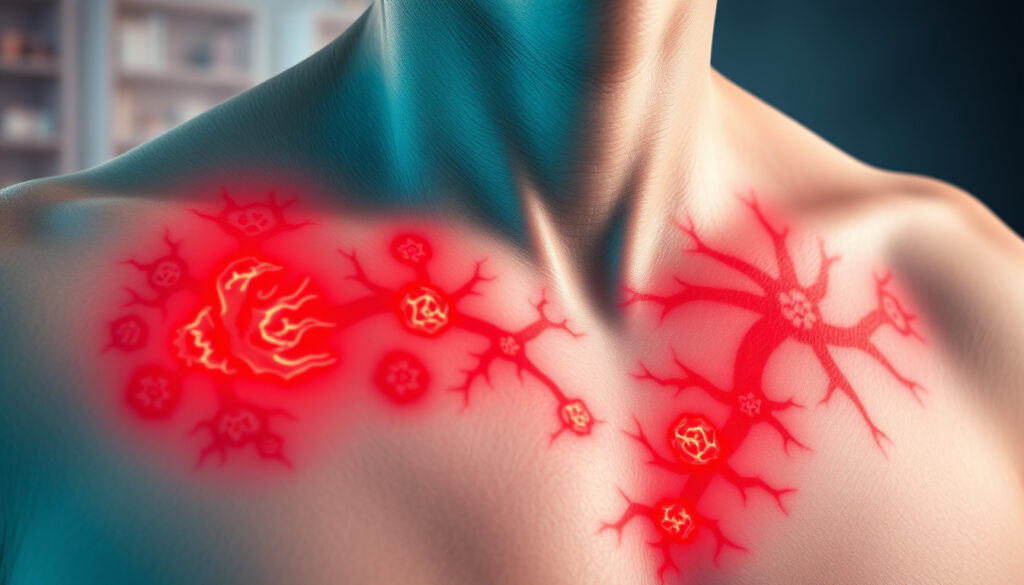
How Do You Get Shingles? Causes, Symptoms, and Treatment
You’ve probably known someone who had shingles — that painful, blistering rash that seems to come out of nowhere — but it’s actually a reactivation of the chickenpox virus that’s been hiding in your body since childhood, affecting about 1 million people in the U.S. each year. By the end of this article, you’ll understand exactly what triggers it, how it spreads, and how to protect yourself.
Annual shingles cases in the U.S.: approximately 1 million ·
Lifetime risk of developing shingles: 1 in 3 people ·
Age group at highest risk: 50 years and older ·
Reduction in risk with Shingrix vaccine: over 90% ·
Most common complication: postherpetic neuralgia (PHN)
Quick snapshot
- Reactivation of varicella-zoster virus (World Health Organization (WHO))
- Anyone who had chickenpox (WHO) (World Health Organization (WHO))
- More common with age and immunosuppression (Mayo Clinic)
- Pain, burning, tingling in a localized area (WHO) (Healthdirect Australia)
- Fever, headache, fatigue (WHO) (Healthdirect Australia)
- Rash appears 1-5 days later (Healthdirect Australia)
- Antiviral drugs within 72 hours (WHO) (Mayo Clinic)
- Pain relief (OTC or prescription) (Mayo Clinic)
- Home care: cool compresses, calamine (CDC)
Five key facts, one pattern: the virus behind shingles is the same one that causes chickenpox, and the risks climb sharply after 50.
| Label | Value |
|---|---|
| Virus responsible | Varicella-zoster virus (same as chickenpox) (WHO) |
| Typical duration (rash to crusting) | 7–10 days (WHO) |
| Pain can persist beyond rash (PHN) | Weeks to months, sometimes years (CDC) |
| Most effective prevention | Two-dose Shingrix vaccine (90%+ efficacy) (CDC) |
| Contagious via | Direct contact with open blisters (CDC) |
What is the most common way to get shingles?
Reactivation of the varicella-zoster virus
- Shingles is caused by the varicella-zoster virus, the same virus that causes chickenpox (WHO).
- After chickenpox, the virus remains dormant in nerve tissue and can reactivate years later (WHO).
- Anyone who has had chickenpox can develop shingles (Mayo Clinic).
The implication: shingles isn’t something you “catch” from the outside — it’s already inside you if you’ve ever had chickenpox.
Who is at risk?
- Adults over age 50 account for the majority of cases (WHO).
- A weakened immune system — from illness, stress, or medications — increases the likelihood (WHO).
- People taking immunosuppressive therapies or with conditions like HIV are especially vulnerable (CDC).
Age is the single strongest risk factor: about one in three adults will develop shingles in their lifetime, and the odds double after 50.
The pattern: aging and immune decline are the primary triggers, not external exposure.
Can you catch shingles from someone else?
- Shingles itself is not contagious — you cannot get shingles from a person with shingles (WHO).
- However, the varicella-zoster virus can spread through direct contact with fluid from shingles blisters (CDC).
- If the virus reaches someone who never had chickenpox or the vaccine, they develop chickenpox — not shingles (CDC).
The catch: the confusion around transmission is understandable, but the distinction matters for quarantine decisions.
What are the first signs of shingles?
Pre-warning symptoms (prodromal phase)
- Pain, burning, tingling, or itching in a localized area often begins days or even weeks before the rash (WHO).
- Mayo Clinic identifies pain or tingling as the usual first symptom (Mayo Clinic).
- Other early signs include headache, fever, chills, and fatigue (Healthdirect Australia).
The characteristic rash
- The rash usually appears as a single stripe of blisters on one side of the body, following a nerve pathway (dermatome) (WHO).
- Blisters are fluid-filled, break open, and crust over within a few days (WHO).
- Shingles can also affect the face, and if near the eye, WHO calls it a medical emergency (WHO).
Complications and danger signs
- Postherpetic neuralgia (PHN) is the most common complication — ongoing nerve pain after the rash heals (CDC).
- PHN risk increases with age; about 10–18% of shingles patients develop it (CDC).
- Rare complications include vision loss, hearing problems, and neurological issues (Mayo Clinic).
The pattern: early treatment in the prodromal window can dramatically reduce the risk of severe pain and scarring.
If the rash appears on your face, especially near the eye, seek emergency care immediately — untreated ocular shingles can cause permanent vision damage.
The implication: knowing the prodromal signs helps you act before the rash fully develops.
What is the quickest way to get rid of shingles?
Antiviral medications
- Antiviral drugs — acyclovir, valacyclovir, and famciclovir — can reduce severity and duration when started within 72 hours of rash onset (WHO).
- Treatment is most effective if initiated during the prodromal phase (Mayo Clinic).
- Prescription antivirals are the only evidence-based way to shorten the illness (CDC).
- See a doctor at the first sign of shingles symptoms.
- Start antiviral medication within 72 hours of rash onset.
- Use pain relief as needed (OTC or prescription).
- Apply cool compresses and keep the rash clean.
Pain management strategies
- Over-the-counter pain relievers like ibuprofen or acetaminophen help mild to moderate pain (Mayo Clinic).
- For severe pain, prescription nerve pain medications (gabapentin, pregabalin) or lidocaine patches may be prescribed (CDC).
- Nerve blocks or corticosteroid injections are options for intractable cases (Mayo Clinic).
Home care and soothing measures
- Cool compresses applied to the rash can reduce pain and itching (CDC).
- Calamine lotion or colloidal oatmeal baths may help dry out blisters and relieve irritation (Healthdirect Australia).
- Keeping the rash clean and dry reduces risk of secondary bacterial infection (Mayo Clinic).
The trade-off: while home remedies ease discomfort, they don’t shorten the infection — antiviral medication within the first 72 hours is the only proven accelerator.
What is usually mistaken for shingles?
Common misdiagnoses
- Shingles can be confused with poison ivy, eczema, contact dermatitis, or herpes simplex (Mayo Clinic).
- The unilateral, dermatomal distribution of shingles rash is a distinguishing feature (WHO).
- A history of chickenpox and prodromal pain also help differentiate (CDC).
Key differences between shingles and other rashes
- Shingles rash is almost always one-sided and follows a nerve line; most other rashes are symmetrical or scattered (WHO).
- The pain often precedes the rash by days — rare for allergic reactions or eczema (Mayo Clinic).
- Blisters are small, grouped, and have a clear fluid — unlike the weeping of poison ivy or the dry scales of eczema (Healthdirect Australia).
When to see a doctor
- If you have a painful rash on one side of the body, especially with tingling or burning beforehand (CDC).
- If the rash is near your eye or on your face (WHO).
- Laboratory tests like PCR or viral culture can confirm diagnosis (Mayo Clinic).
The implication: if your rash is on both sides of your body or spreads symmetrically, it’s almost certainly not shingles.
How long is someone with shingles contagious?
Contagious period and transmission route
- A person with shingles is contagious from the time blisters appear until all blisters have crusted over (usually 7–10 days) (CDC).
- Transmission requires direct contact with the fluid from open blisters — the virus does not spread through airborne droplets (WHO).
- Once blisters are fully crusted, the person is no longer contagious (CDC).
Precautions to prevent spread
- Keep the rash covered with a non-stick dressing (CDC).
- Avoid scratching; wash hands frequently (Healthdirect Australia).
- Stay away from people who have never had chickenpox or the vaccine, pregnant women, newborns, and immunocompromised individuals (CDC).
Who is at risk of catching the virus?
- People who never had chickenpox or the chickenpox vaccine are susceptible (CDC).
- If exposed, they develop chickenpox (varicella), not shingles (WHO).
- Immunocompromised individuals are at higher risk for severe chickenpox if exposed (CDC).
The pattern: you’re only a transmission risk during the blister phase — and only to people who lack chickenpox immunity.
Timeline signal
Here is the typical progression of shingles over time.
| Period | What happens |
|---|---|
| Days 1–2: Prodrome | Pain, tingling, or itching in a specific area; no rash yet (WHO). |
| Days 2–3: Rash appears | Red patches form, then develop into fluid-filled blisters (Healthdirect Australia). |
| Days 5–7: Blisters burst and crust | Blisters dry out, form scabs; contagious period ends when fully crusted (CDC). |
| Weeks to months: Recovery | Rash heals, but pain may linger (postherpetic neuralgia) (CDC). |
The implication: knowing this timeline helps you catch the window for antiviral treatment — once blisters crust, medication doesn’t change the course.
Confirmed facts
- Shingles is caused by reactivation of dormant varicella-zoster virus (WHO).
- Antiviral treatment reduces duration and severity if started early (WHO).
- Vaccination significantly reduces risk of shingles and PHN (CDC).
- Shingles is contagious to those without prior chickenpox or vaccination via direct contact with rash fluid (CDC).
What’s unclear
- Exact trigger for reactivation is not fully understood, though age, stress, and immune suppression are factors (WHO).
- The role of diet or lifestyle in preventing reactivation is not proven (Mayo Clinic).
- Natural history of mild cases without treatment is not well documented (CDC).
- The precise molecular triggers of VZV reactivation remain under investigation.
Expert perspectives on shingles
“Shingles, also called herpes zoster, is a viral infection that causes a painful rash.”
— World Health Organization (global health authority)
“Pain or a tingling sensation is usually the first symptom of shingles.”
— Mayo Clinic (leading U.S. medical center)
“A person with shingles is contagious from the time blisters appear until all blisters have crusted over.”
— CDC (U.S. public health agency)
For someone in the U.S. over age 50, the choice about vaccination is clear: get the two-dose Shingrix series, or face a one-in-three chance of developing a painful, potentially long-lasting illness that antiviral drugs can only shorten, not eliminate.
Understanding how you get shingles is key to prevention, and for a closer look at transmission risks you can explore how people catch shingles and how it spreads catch shingles and how it spreads later in the article.
Frequently asked questions
Can you get shingles if you never had chickenpox?
No. Shingles is the reactivation of the varicella-zoster virus, which only happens in people who previously had chickenpox (WHO). If you never had chickenpox or the chickenpox vaccine, you can’t get shingles — but you could get chickenpox if exposed to the virus from a shingles blister.
How does shingles spread?
Shingles itself does not spread, but the virus inside the blisters can. Direct contact with fluid from open blisters can transmit the varicella-zoster virus to someone who hasn’t had chickenpox, giving them chickenpox (CDC).
Can shingles appear on both sides of the body?
Rarely. The rash typically follows a single dermatome (nerve pathway) on one side. Bilateral shingles is extremely uncommon and often signals an underlying immune problem (WHO).
Is the shingles vaccine safe for people with weakened immune systems?
Shingrix is recommended for immunocompromised adults aged 19 and older who are at increased risk, but it’s not given during an active shingles episode. Talk to your doctor about timing (CDC).
Can shingles recur?
Yes, though most people get shingles only once. Recurrence is more likely in people with severely weakened immune systems (Mayo Clinic).
What should I do if I think I have shingles?
See a doctor immediately — ideally within 72 hours of the rash appearing. Early antiviral treatment can reduce pain, shorten the illness, and lower your risk of postherpetic neuralgia (WHO).
How long does shingles pain last after the rash heals?
For some people, nerve pain called postherpetic neuralgia can last weeks, months, or even years after the rash has healed. The risk increases with age (CDC).
Is there a natural or home remedy that works for shingles?
No. No natural remedy has been proven to kill the virus or shorten the illness. Cool compresses, calamine lotion, and OTC pain relievers can ease symptoms, but they don’t replace antiviral medication (Mayo Clinic).
Related reading
More related posts
 Real Madrid vs Benfica Lineups: Predicted XI & Mbappé Out
 How Many Episodes of The Pitt? Season Count Explained
 Canelo vs Crawford Fight Card: Full Results & Undercard
 Pictures of Inflammatory Breast Cancer in Early Stages
 Is Washington DC a State – Status, History and Statehood Explained
 Does UPS Deliver on Saturdays? US, UK & Ireland Rules
 Kubo and the Two Strings: Age Rating, Culture & Stop-Motion
 The Phoenician Scheme Reviews: Booed at Cannes