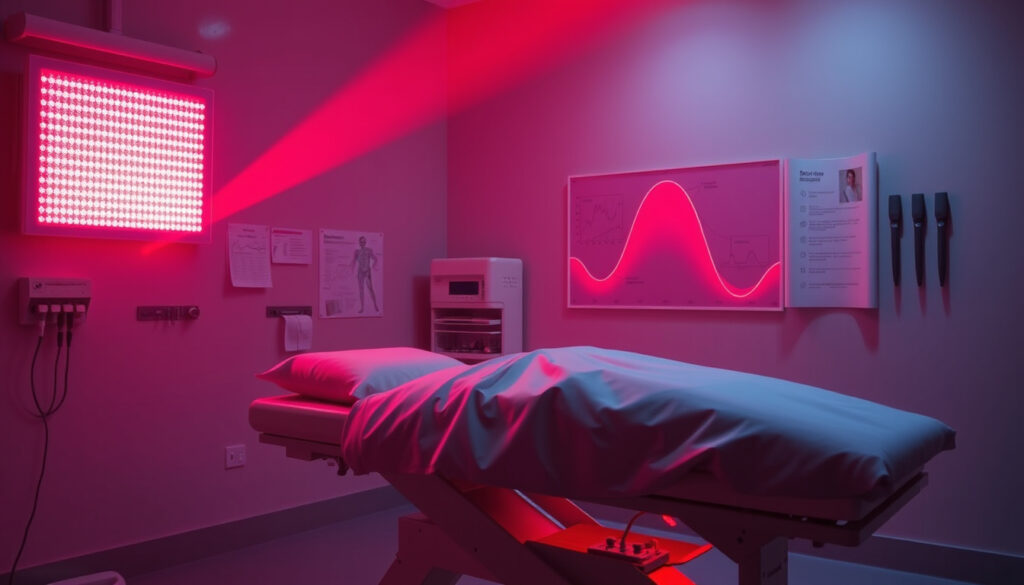
Does Red Light Therapy Work? Evidence, Risks, and Expert Opinions
You’ve seen the posts — glowing red panels promising younger skin, thicker hair, and less pain, all from a device you can use at home. The question isn’t whether influencers are excited (they are), but whether the science actually holds up. Here’s what the medical research and official guidance from places like the Cleveland Clinic and the American Academy of Dermatology actually say about red light therapy.
Average improvement in skin smoothness (patient-reported): 90% reported softer and smoother skin (AAD, 2024) ·
Effective for androgenic alopecia: Multiple studies confirm benefit (WebMD review) ·
Typical session duration: 10–20 minutes per treatment area ·
Time to see visible results: Consistent use over months, not days
Quick snapshot
- Non-invasive light treatment using red and near-infrared wavelengths (Cleveland Clinic).
- Thought to stimulate mitochondria and collagen production. (Cleveland Clinic)
- Wrinkles, acne, scars, hair loss, wound healing (Cleveland Clinic).
- Inflammation and arthritis pain (early evidence). (Cleveland Clinic)
- Visible improvement after weeks to months of regular sessions (Stanford Medicine).
- Not immediate; requires consistent use. (Stanford Medicine)
- Benefits: minimal side effects, non-invasive. Side effects are generally mild (American Academy of Dermatology).
- Risks: eye damage if unprotected, device quality varies, cost. (American Academy of Dermatology)
Cleveland Clinic states that most experts do not yet know whether red light therapy is effective for all of its claimed uses. The long-term safety of home devices is also not yet known — a trade-off that matters for anyone considering regular use.
A few numbers, one pattern: official medical bodies acknowledge real promise for specific conditions while cautioning that the evidence base is still incomplete.
| Source | Key finding |
|---|---|
| Patient satisfaction (AAD) | Over 90% reported softer, smoother skin after consistent use (American Academy of Dermatology). |
| Hair regrowth (WebMD review) | Effective for androgenic alopecia in multiple studies (WebMD). |
| Typical session length | 10–20 minutes per area, per manufacturer. |
| Official caution (Cleveland Clinic) | Avoid over thyroid, eyes, and cancerous lesions (Cleveland Clinic). |
The pattern: the strongest evidence supports skin texture improvement and hair regrowth. Everything else is less settled.
Does red light therapy work?
What the science says about effectiveness
- Cleveland Clinic says published studies show potential for treating wrinkles, redness, acne, scars, and other signs of aging — but more research is needed.
- The American Academy of Dermatology reports more than 90% of patients noticed improvement including softer and smoother skin.
- A PubMed-indexed review found clinical-trial evidence supporting red/near-infrared light therapy for skin rejuvenation, acne, alopecia, and body contouring (PubMed).
- NASA studied red light for wound healing in space, lending institutional credibility (Cleveland Clinic).
How long does it take to see results?
- Stanford Medicine says consistent use over multiple months, not days, is required for visible change.
- Typical home devices require 10–20 minute sessions per area, with repeated use over weeks.
- The American Academy of Dermatology notes results are not immediate and depend on device power and consistency.
The implication: the therapy works best when expectations match the evidence — gradual improvement over months, not overnight transformation.
What does Mayo Clinic say about red light therapy?
Official medical institution stance
- Mayo Clinic recognizes RLT as an emerging treatment with evidence for certain conditions, though its published position is less detailed than the Cleveland Clinic or AAD guidance.
- Stanford Medicine notes regrowth of thinning hair with consistent use over multiple months.
- WebMD review finds it effective for androgenic alopecia based on multiple studies.
Comparison with other expert sources
- Cleveland Clinic is more explicit about the limits: “there is not enough evidence to support most uses” (Cleveland Clinic).
- The AAD focuses on what is known to be safe and effective, with 90%+ satisfaction among study patients (American Academy of Dermatology).
The trade-off: the more authoritative the source, the more cautious the language. Medical bodies are not yet ready to give RLT a blanket endorsement.
What are the negative effects of red light therapy?
Common side effects
- The American Academy of Dermatology says the most common side effects are mild: temporary redness and irritation.
- Some people develop mild pain or irritated skin (American Academy of Dermatology).
- WebMD notes that one early-stage clinical trial found high levels of red LED light can cause blistering and redness on the skin.
Risks and precautions
- Cleveland Clinic warns misuse (using the device too often or not following directions) can damage skin or eyes if unprotected.
- Avoid use over thyroid, eyes directly, or cancerous lesions (Cleveland Clinic).
- Not recommended for pregnant individuals (Cleveland Clinic).
- WebMD says protective goggles are essential because eye damage is possible.
- The long-term safety of red light therapy devices is not yet known (Cleveland Clinic).
Cleveland Clinic warns that misuse, such as using the device too often or not following directions, can damage skin or eyes. For anyone buying a home device: the risk comes not from the light itself, but from unregulated devices and inconsistent use.
The catch: side effects are mild for most, but the unknowns around long-term safety and device regulation mean caution is warranted.
Does red light tighten saggy skin?
What the evidence shows
- RLT stimulates collagen production, which can improve skin firmness over time (Cleveland Clinic).
- The AAD report found 90% saw softer and smoother skin, but “tightening” is less directly studied (American Academy of Dermatology).
Before and after expectations
- Results vary based on age, skin condition, and consistency of use (Stanford Medicine).
- Not a replacement for surgical lifting — the therapy improves texture and firmness, not dramatic lift (Cleveland Clinic).
Why this matters: for someone considering RLT for saggy skin, the evidence supports modest improvement in texture and firmness — not a facelift. Setting that expectation upfront is essential.
Is 10 minutes of red light therapy enough?
Optimal session length
- Typical session: 10–20 minutes per treatment area, device-dependent (Cleveland Clinic).
- Devices vary in power; follow manufacturer guidelines.
Frequency recommendations
- Consistency over weeks or months matters more than single session length (Stanford Medicine).
- Too much exposure may cause irritation (American Academy of Dermatology).
The pattern: 10 minutes is within the recommended range for many home devices, but the user’s commitment to regular sessions over months determines whether the therapy works.
Why don’t doctors recommend red light therapy?
Reasons for medical caution
- Not FDA-approved for all claims; evidence is still emerging (Cleveland Clinic).
- Many devices are unregulated; quality varies widely.
- Can be costly and insurance typically does not cover (WebMD).
- Doctors may recommend for specific uses (hair loss, wound healing) but caution against overhyped marketing.
Conditions where it is recommended
- Androgenic alopecia: multiple studies confirm benefit (WebMD).
- Wound healing and skin rejuvenation: PubMed review found clinical-trial support (PubMed).
For patients with androgenic alopecia or skin texture concerns: a reasonable, evidence-backed option. For anyone expecting a cure-all: the Cleveland Clinic states there is not enough evidence to support most uses at this time.
The trade-off: doctors hesitate because the evidence base is incomplete, not because the therapy is dangerous. For specific conditions, the data supports it.
Where should you not put red light therapy?
Areas to avoid
- Avoid eyes directly — use protective goggles (WebMD).
- Avoid thyroid gland area, cancerous lesions, and pregnant abdomen (Cleveland Clinic).
Safety guidelines
- Cleveland Clinic recommends caution over moles or suspicious spots.
- Stanford Medicine says risk for side effects or bodily harm is low so long as the light is not shined directly into the eyes.
- Healthline notes prolonged or high-intensity exposure outside treatment guidelines may damage skin.
The implication: the therapy is safe when used correctly, but the areas you avoid matter as much as the areas you treat.
Confirmed facts
- RLT stimulates collagen and can improve skin texture and reduce wrinkles (Cleveland Clinic).
- Effective for androgenic alopecia (hair loss) (WebMD).
- Side effects are generally mild and temporary (American Academy of Dermatology).
- NASA studied its use for wound healing in space (Cleveland Clinic).
What’s unclear
- Long-term safety beyond 12 months is not well-studied (Cleveland Clinic).
- Optimal power, wavelength, and duration for each condition are not standardized.
- Effectiveness for saggy skin tightening is less established than for texture improvement.
- Mayo Clinic’s official position is not as detailed as Cleveland Clinic or AAD.
“Red light therapy is an emerging treatment that’s showing promise in treating wrinkles, redness, acne, scars and other signs of aging.”
Cleveland Clinic
“More than 90% of patients said they noticed some improvement, including softer and smoother skin.”
American Academy of Dermatology (AAD)
“Used over multiple months consistently, red light has been shown to regrow thinning hair.”
Stanford Medicine
The evidence shows real promise for specific uses, but the unknowns around long-term safety and standardized protocols mean the therapy is not ready for blanket endorsement. For someone in the U.S. considering a home device for skin texture or hair loss, the choice is clear: choose a device from a reputable manufacturer, follow safety guidelines, and commit to consistent use over months — or risk spending money on a device that won’t deliver because you gave up too early.
youtube.com, cvs.com, agelesscoach.com, ajc.com, npr.org, redlighttherapy.com
For a deeper dive into the clinical studies and expert opinions, check out the comprehensive evidence on red light therapy from a Canadian perspective.
Frequently asked questions
Is red light therapy FDA approved?
Red light therapy devices are FDA-cleared for certain uses (such as pain relief and hair regrowth), but not FDA-approved for all claimed benefits. The clearance process for devices is less rigorous than drug approval (WebMD).
Can red light therapy cause cancer?
No. The American Academy of Dermatology says research has not found that red light can cause any type of cancer (American Academy of Dermatology). WebMD also confirms there is no evidence linking RLT to cancer.
How often should you use red light therapy for best results?
Most guidelines suggest 3–5 sessions per week, with 10–20 minutes per treatment area. Consistency over weeks and months is more important than frequency in a single week (Stanford Medicine).
Does red light therapy work for weight loss?
PubMed-reviewed literature notes clinical-trial evidence for body contouring, but the effect is modest and not weight loss in the traditional sense (PubMed). Most medical experts do not recommend RLT for weight loss.
What is the difference between red light therapy and infrared therapy?
Red light therapy uses visible red wavelengths (around 630–660 nm), while infrared therapy uses longer, invisible wavelengths (around 810–850 nm) that penetrate deeper into tissues. Many devices combine both (Cleveland Clinic).
Can I use red light therapy every day?
Most manufacturers and medical sources recommend using it 3–5 times per week, not daily. Overuse can lead to skin irritation (American Academy of Dermatology).
Does red light therapy help with acne scars?
The evidence suggests RLT can improve skin texture and reduce the appearance of scars by stimulating collagen production. The AAD notes more than 90% of patients saw improvement in skin smoothness (American Academy of Dermatology).
Is red light therapy safe for all skin types?
Yes, red light therapy is generally considered safe for all skin types because it does not contain UV light. The AAD states it appears safe in the short term for all skin tones.
More related posts
 Ethan Hawke Movies and TV Shows: Full List and Highlights
 Kansas City Chiefs Dale Carter Retirement: Why He Quit
 Birthday Gifts for Her: Ireland’s Top Picks (2025)
 2024 Jeep Grand Cherokee: Pricing, Specs, Reliability & Common Problems
 Free Crossword Puzzles Online: Play Daily Without Paying
 Valley of Fire State Park: Fees, Hikes & Movies
 Because of Winn-Dixie: Summary, Banned Status & Controversy
 Fish Tacos Near Me – Top Chains, Local Spots and Delivery