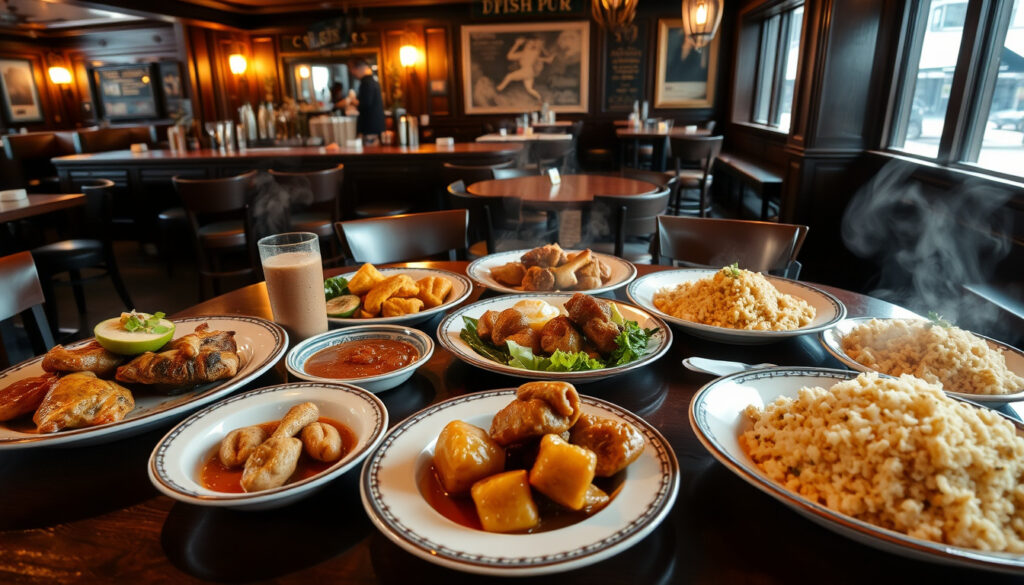
Filipino Food Near Me: Dublin’s Best Restaurants
Anyone who’s searched for “Filipino food near me” in Dublin has probably noticed a shift: what once felt like a missing option is now becoming a legitimate scene, with the July 2025 opening of Kaldero, Ireland’s first Irish-Filipino restaurant led by chef Richie Castillo, making finding adobo or lumpia in the city centre finally straightforward. This guide walks through where to eat, what to order, and why the Filipino food scene in Ireland is growing fast.
Most popular Filipino dish: Adobo ·
Filipino restaurants in Dublin (Yelp): Top 10 ·
Filipino food delivery in Dublin: Available via Uber Eats
Quick snapshot
- Adobo is widely considered the national dish of the Philippines (Kaldero (restaurant site))
- Kaldero describes itself as Dublin’s first Irish-Filipino restaurant (Kaldero)
- Orani, a family-run Filipino café, opened in Blanchardstown in 2023 (Instagram post)
- Exact number of Filipinos in Ireland
- Health rating of all Filipino dishes
- Exact number of Filipino restaurants in Dublin
- Kaldero opened formally on July 2, 2025 (Char Food Guide (food publication))
- Orani opened in 2023 in Blanchardstown (Instagram reel)
- More Filipino restaurants expected as diaspora grows
- Expansion of delivery options via Uber Eats
Four key facts about the Filipino food scene in Dublin, with one pattern: the restaurants are family-led, proud of their heritage, and unapologetically honest about what they serve.
| Label | Value |
|---|---|
| Most popular dish | Adobo |
| Filipino restaurants in Dublin | Top 10 on Yelp |
| Delivery option | Uber Eats |
| Community centre | Dublin |
Is there a Filipino community in Ireland?
Yes — and it’s concentrated in Dublin and other urban areas. The Filipino community in Ireland has grown steadily over the past two decades, driven by work opportunities in healthcare, hospitality, and tech. Community events such as Barrio Fiesta gatherings are held regularly, and Filipino grocery stores stock staples like bagoong, tocino, and ube.
How many Filipinos are in Ireland?
- No official census figure is publicly available for the total Filipino-born population in Ireland.
- Estimates suggest several thousand, with Dublin having the largest concentration.
- The community continues to grow as more Filipino professionals move to Ireland (Meet in Ireland (tourism board partner)).
The implication: Dublin’s Filipino community is now large enough to support restaurants like Kaldero and Orani, which signal a shift from hidden home-cooking to visible dining options.
Dublin’s Filipino diaspora has reached a tipping point: where once the only option was cooking at home, now restaurants are opening with family recipes at the centre. For Filipino residents, that means a taste of home without a flight.
What’s the most popular Filipino food?
Adobo holds the crown. Widely considered the national dish of the Philippines, adobo is a braised meat dish — typically chicken or pork — simmered in vinegar, soy sauce, garlic, and bay leaves. Kaldero serves its own version, drawing from traditional Filipino flavours and regional recipes with Irish ingredients (Kaldero (food & drink page)).
What do Filipinos commonly eat?
- Rice is the non-negotiable staple at every meal — breakfast, lunch, and dinner.
- Common dishes include adobo (braised meat in vinegar-soy), sinigang (sour tamarind soup), and lumpia (spring rolls).
- Filipino meals are typically served family-style: several dishes shared around the table (MICHELIN Guide (restaurant review authority)).
Why this matters: Filipino eating culture is communal by design. Restaurants like Kaldero design their menus to be shared, which mirrors the way food is eaten in Filipino homes.
The implication: Kaldero’s approach reflects a broader trend in diaspora cuisine—honest cooking rooted in personal history rather than rigid tradition.
What is the best Filipino street food?
Filipino street food is a vibrant, affordable part of daily life in the Philippines — and some of it is now finding its way onto Dublin menus. Popular street eats include fish balls (deep-fried fish paste on sticks), kwek-kwek (hard-boiled quail eggs in orange batter), and isaw (grilled chicken or pork intestines).
- Kaldero offers Dynamite Lumpia — a long green chilli wrapped in lumpia wrapper and fried — which is itself a street food classic (MICHELIN Guide).
- Orani in Blanchardstown serves karaage rice bowls, which are a Filipino-Japanese twist (Instagram reel).
The pattern: street food is making the jump from hawker stalls to sit-down restaurants, but the flavours — bold, sour, salty, deep-fried — remain intact.
Is Filipino food healthy?
Like any cuisine, it depends on what you order. Filipino food can be balanced with vegetables and fresh seafood — sinigang, for example, is a tamarind-based soup packed with vegetables and fish. But dishes like lechon (whole roasted pig) and crispy pata (deep-fried pork leg) are undeniably high in fat and calories.
What is the unhealthiest food in the Philippines?
- Lechon is calorie-dense and fatty, clocking significant saturated fat per serving.
- Crispy pata is deep-fried, adding oil calories on top of the pork’s natural fat.
- Many silog (garlic rice + egg + meat) breakfasts are heavy on carbohydrates and fried elements.
The trade-off: Filipino cuisine rewards balance. Order sinigang and lumpia one meal, splurge on crispy pata the next. No single dish defines the diet.
Filipino restaurants in Dublin — including Kaldero and Orani — use fresh ingredients and family recipes, which naturally reduces reliance on ultra-processed components. For health-conscious diners, leaning on soup-based dishes (sinigang, tinola) is a smart move.
The catch: even with fresh ingredients, dishes like lechon and crispy pata remain indulgent, so balance is key.
What do Filipinos commonly eat?
Rice anchors every meal. Breakfast might be tapsilog (cured beef, garlic rice, fried egg) or longsilog (sweet sausage version). Lunch and dinner revolve around a protein — adobo, sinigang, or grilled fish — with rice and a side of vegetables. Lumpia, both fresh and fried, appears as a snack or appetiser.
- Kaldero’s menu includes dishes like adobo pusit (squid adobo) and inasal (grilled chicken), served with rice (Kaldero Instagram (social media menu)).
- Orani offers tapsilog, longsilog, and bicol express (pork in coconut milk and chillies) (Instagram reel).
The catch: if you’re eating Filipino, you’re eating rice. That’s non-negotiable. For low-carb diets, sinigang (soup) or grilled dishes with vegetables are the better pick.
“We are not chasing authenticity — we are cooking from lived experience.”
— Richie Castillo, chef and co-owner of Kaldero (Kaldero)
“Kaldero blends Filipino tradition with Irish ingredients and open-fire cooking.”
— Eclective (Eclective (hospitality group))
A forward stake: Dublin’s Filipino food scene is still in its early days. With Kaldero officially open and Orani serving Blanchardstown, the foundation is laid. For anyone searching “Filipino food near me” in Ireland, the answer is no longer a shrug. For Filipino residents, the choice is now clear: support the new wave of family-run restaurants, or wait — and hope more follow.
Frequently asked questions
What are the best Filipino restaurants in Dublin?
Kaldero in Dublin 2 (Stephen’s Green Shopping Centre) is the first Irish-Filipino restaurant. Orani in Blanchardstown Corporate Park is a family-run Filipino-Asian café. Both are recommended.
Is Filipino food available for delivery in Ireland?
Yes — Uber Eats lists Filipino food options in Dublin, including dishes from Kaldero and other local vendors.
What is a typical Filipino breakfast?
A typical breakfast is a silog — garlic rice, fried egg, and a protein like tapsilog (cured beef), longsilog (sweet sausage), or tosilog (sweet cured pork).
Are there Filipino grocery stores in Ireland?
Yes — Asian grocery stores in Dublin, particularly around the city centre, stock Filipino staples like bagoong, tocino, and ube.
How can I cook Filipino food at home?
Start with adobo: chicken or pork simmered in vinegar, soy sauce, garlic, and bay leaves. Recipes are widely available from Filipino food blogs and Kaldero’s social media.
What is the history of Filipino immigration to Ireland?
Filipino immigration to Ireland increased from the early 2000s, driven by demand for nurses, care workers, and hospitality staff. The community is now one of Ireland’s largest Asian diaspora groups, concentrated in Dublin.
More related posts
 New Year’s Eve Events Near Me in Ireland: Dublin, Galway & More 2025
 Woody Plants Grow a Garden: Full List & Beanstalk Guide
 Shaun White and Nina Dobrev Break Up: Timeline and Details
 Can Dogs Eat Tomatoes? Safety, Risks & Feeding Guide
 Portugal vs Denmark Lineups: Start XI, Result & Analysis
 Pictures of Inflammatory Breast Cancer in Early Stages
 Night Agent Season 3: Release Date, Cast, and Rose’s Exit
 Symptoms of Ear Infection: How to Know, Treat, and When to Worry