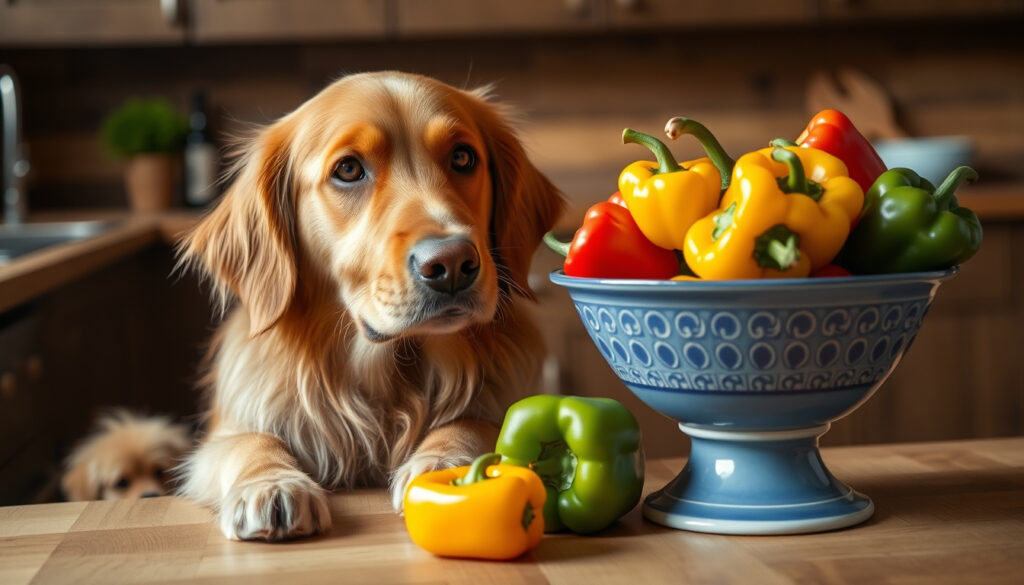
Can Dogs Have Bell Peppers? Safety, Colors & Serving Guide
You’re slicing bell peppers for dinner, and your dog is giving you that hopeful look from the kitchen floor. The good news: bell peppers are perfectly safe for dogs when prepared the right way. In this vet-sourced guide, you’ll learn which colors are best, how much to serve, and which peppers to keep far away from your pup’s bowl.
Safe Colors for Dogs: red, yellow, orange, green ·
Serving Size (small dog): 1–2 small slices per day ·
Serving Size (large dog): up to ½ bell pepper per day ·
Toxic Varieties: chili peppers, jalapeños, spicy peppers
Quick snapshot
- Bell peppers are not toxic to dogs (PetMD veterinary review)
- Red bell peppers have highest nutrient density (PetMD) (PetMD veterinary review)
- Removing seeds and stem is recommended (Four Leaf Rover pet health)
- Spicy peppers (chili, jalapeño) are harmful (PetMD) (PetMD veterinary review)
- Exact long-term effects of daily feeding on kidney function (limited studies)
- Individual dog allergies to bell peppers (rare but possible)
- Digestive upset can appear within 12–24 hours if too much is fed (Four Leaf Rover)
- Always monitor your dog after introducing any new food
- Consult your vet if you notice vomiting, diarrhea, or lethargy
Five numbers from the research, one pattern: bell peppers pack a nutritious punch with almost no risk—as long as you follow prep guidelines.
| Metric | Value |
|---|---|
| Calories (1 cup raw bell pepper) | 30 kcal |
| Vitamin C (% daily value for humans in 1 cup) | 150% |
| Fiber content per pepper | 2.5 g |
| Water content | 92% |
| Fat content (1 cup raw bell pepper) | 0.3 g |
| Safe per PetMD veterinary review | Yes, in moderation |
Can dogs have bell peppers raw?
Yes, raw bell peppers are safe for dogs when fed in moderation. The crunchy texture can even help clean teeth, but portion control matters.
Serving size guidelines
- Extra-small dogs (up to 10 lb): 1–2 small pieces, about 1 tablespoon total (PetMD extra-small dog guide)
- Small dogs (10–25 lb): less than ¼ bell pepper, or 3–4 small pieces (PetMD small dog guide)
- Medium dogs (25–50 lb): ¼ bell pepper, up to 8 small pieces (PetMD medium dog guide)
- Large dogs (50–75 lb): ½ bell pepper or less (PetMD large dog guide)
- Extra-large dogs (75+ lb): ¾ bell pepper or less (PetMD extra-large dog guide)
Risks of raw bell peppers
- Large chunks pose a choking hazard for small dogs
- Too much fiber can cause diarrhea or gas (Four Leaf Rover)
- Always wash thoroughly and remove the stem, seeds, and white pith
PetMD’s size-based portions give every dog owner a clear starting point—stick to these limits and your dog gets the crunch without the upset.
The implication: precise prep turns a safe snack into a healthy habit.
What color bell peppers are safe for dogs?
All colors are safe, but ripeness changes the nutrient profile.
Red bell peppers: most nutritious
Red peppers are the ripest variety, meaning they contain the highest concentrations of vitamin A and vitamin C. According to PetMD veterinary review, red peppers offer the most antioxidant punch per bite.
Yellow and orange: good alternatives
Yellow and orange bell peppers fall between green and red in ripeness. They’re sweeter than green peppers and still packed with beta-carotene.
Green bell peppers: safe but less ripe
Green peppers are simply unripe bell peppers. They are safe and have a slightly bitter taste that some dogs may not prefer. They contain less sugar and fewer vitamins than red, but are still a healthy choice.
The pattern: as bell peppers ripen from green to red, their vitamin content increases—but all are safe.
Can dogs eat bell peppers cooked?
Cooked bell peppers can be easier for dogs to digest, especially for those with sensitive stomachs.
Best ways to cook bell peppers for dogs
- Steam, boil, or roast until tender—no oil, salt, garlic, onion, or spices (Four Leaf Rover preparation advice)
- Cut into bite-sized pieces after cooking to avoid any choking risk
- Cool completely before serving
Plain cooking vs. seasoned
Seasonings commonly used on bell peppers—salt, garlic powder, onion powder, black pepper—are either unhealthy or toxic for dogs. PetMD emphasizes that any additives negate the health benefits and can cause gastrointestinal distress.
One seasoned piece from your stir-fry isn’t a crisis, but making it a habit introduces unnecessary risks—plain is the only safe route for dogs.
The pattern: plain cooking preserves benefits while eliminating risks.
Are any peppers toxic to dogs?
Yes—the pepper family splits into two camps: sweet and hot.
Safe peppers: bell, sweet, mini
- All bell pepper colors (green, red, yellow, orange) are safe (PetMD)
- Sweet mini peppers and banana peppers (non-spicy) are also fine
Toxic peppers: chili, jalapeño, habanero
- Hot peppers contain capsaicin, which causes burning, drooling, vomiting, and diarrhea (PetMD capsaicin warning)
- Avoid all spicy varieties and pepper-flavored treats
- Black pepper (powder) is not toxic but can cause stomach upset if consumed in large amounts
The trade-off: sweet bell peppers offer a crunchy vitamin boost; hot peppers offer only risk.
Can puppies eat bell peppers raw?
Puppies can eat bell peppers, but extra care is needed because of their smaller size and developing digestive systems.
Age and size considerations
- Start with small, soft pieces after weaning (around 8 weeks)
- Cook until tender for easier chewing and digestion (Four Leaf Rover puppy advice)
- Avoid raw large chunks to prevent choking
Preparation for teething puppies
Cooked bell pepper strips can be a soothing, cold treat during teething. Freeze small pieces for a natural chew toy that’s gentle on gums.
Puppies explore the world with their mouths—giving them safe, controlled portions of bell pepper builds good habits without risking their delicate stomachs.
What this means: early, careful introduction sets the stage for a varied, nutritious diet.
Upsides
- Low-calorie treat with vitamins A, C, B6 and fiber
- Crunchy texture may help dental health
- All colors are safe
- Easy to prepare (raw or plain cooked)
Downsides
- Choking hazard if not cut small enough
- Can cause gas or diarrhea if overfed
- Seeds and stem must be removed
- Not a complete meal—cannot replace balanced dog food
What’s confirmed vs. what remains unclear
Confirmed facts
- Bell peppers are not toxic to dogs (PetMD veterinary review)
- Red bell peppers have the highest nutrient density (PetMD)
- Spicy peppers (chili, jalapeño) are harmful (PetMD)
What’s unclear
- Exact long-term effects of daily feeding on dog kidney function (limited studies)
- Individual dog allergies to bell peppers (rare but possible)
- Removing seeds and stem is recommended (Four Leaf Rover pet health)
What the experts say
“Some dogs will be fine with it, and some won’t. Large dogs less than half a pepper, small dogs less than a quarter.”
— Dr. Fox, AKC veterinary consultant (size recommendation)
“Bell peppers are on the safe list for dogs to eat.”
— PetMD veterinary review (safety confirmation)
For dog owners who want a crunchy, vitamin-rich treat, bell peppers deliver on safety and nutrition—as long as you stick to plain preparation and size-appropriate portions. The choice is clear: serve them right, and your dog gets a healthy snack; skip the prep rules, and you risk an upset stomach or worse.
Related reading: Can Dogs Eat Tomatoes? Safety, Risks & Feeding Guide
Frequently asked questions
Can dogs eat green bell peppers?
Yes, green bell peppers are safe. They are just unripe red peppers and contain slightly fewer vitamins but are still a healthy, low-calorie option.
Can dogs eat cooked bell peppers with rice?
Yes, plain cooked bell peppers with plain white rice make a bland, easy-to-digest meal for dogs with upset stomachs. Avoid adding any seasoning.
Is it safe for dogs to eat bell pepper seeds?
Seeds are not toxic but are hard to digest. They may cause stomach upset or, in small dogs, a blockage. Always remove seeds before feeding.
Can dogs have bell pepper every day?
As an occasional treat, yes. Daily feeding in large amounts can lead to diarrhea from excess fiber. Rotate with other safe vegetables like carrots or green beans.
What happens if my dog eats a whole bell pepper?
Monitor for choking, vomiting, or diarrhea. Most dogs pass it without issue, but if symptoms appear or your dog seems distressed, contact your veterinarian.
More related posts
 Walmart Supercenter Near Me: Find Locations, Hours, and More
 National Debt Relief Reviews: Pros, Cons, and What to Know
 0.625 as a Fraction: 5/8 in Simplest Form Explained
 B&H Photo Video: Trust, Controversy, Pricing & More
 Seattle Seahawks vs Patriots Stats: Head-to-Head Records
 Cape Town South Africa Travel Guide: Safety, Costs & Best Time
 Watch Coraline (Film) Online: Netflix, Tubi & More
 Antibiotics for Sinus Infection: When You Need Them and When You Don’t