What Is a Bunion? Causes, Symptoms, and Treatment Options
That stiff, achy bump at the base of your big toe makes wearing your favorite shoes feel like a punishment. You’re probably wondering if it’s something serious, or if switching to wider sneakers will fix it. Here’s the straight story: bunions are a progressive foot deformity, not a cosmetic nuisance, and the choices you make now can decide whether you manage the pain for years or end up needing surgery.
Adults over 65 affected: approximately 1 in 3 ·
Gender ratio (women to men): 10:1 ·
Most common cause: ill-fitting footwear ·
Symptom onset age: typically after 30 ·
Hereditary link: strong genetic predisposition
Quick snapshot
- Bunions are a progressive deformity of the first metatarsophalangeal joint (NCBI Bookshelf – medical reference).
- Narrow footwear is a strong modifiable risk factor (Cleveland Clinic – leading hospital system).
- Women are 10 times more likely to develop bunions (Des Moines University – podiatry education).
- Surgery permanently corrects alignment (NHS – UK public health authority).
- How genetics exactly interact with footwear remains unknown.
- Long-term efficacy of bunion splints and correctors is debated.
- Optimal post-surgical rehab protocols vary among surgeons.
- Condition develops gradually over years, not months (Paragon Podiatry – clinical practice).
- Early signs appear after age 30 in genetically predisposed people. (Paragon Podiatry – clinical practice)
- Non-surgical interventions can slow progression and relieve pain.
- Surgery success rates exceed 85% for pain relief when needed.
The typical woman who wears fashion shoes (Des Moines University – podiatry education) faces a 10:1 odds ratio of developing a bunion compared to men. For her, the choice between narrow heels and wide toe boxes is the single most impactful decision this decade.
What is the main cause of a bunion?
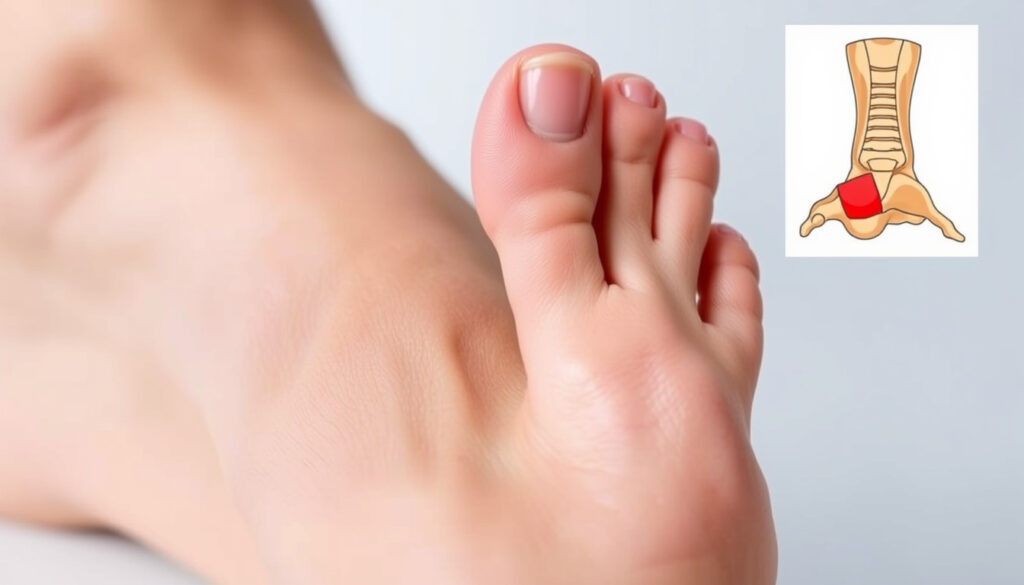
A bunion forms when the first metatarsal bone shifts sideways while the big toe angles inward toward the second toe, creating that characteristic bony bump at the joint base (NCBI Bookshelf – medical reference). This isn’t a sudden injury — it’s a gradual process driven by three factors.
Foot mechanics and pronation
- Abnormal walking mechanics — particularly overpronation (rolling the foot inward) — place extra stress on the big toe joint (Paragon Podiatry – clinical practice).
- People with flat feet or low arches are significantly more prone because the foot’s arch fails to absorb shock properly, transferring load to the MTP joint.
- Joint instability from ligament laxity can accelerate the deformity.
The implication: your foot’s natural architecture matters as much as any shoe you put on. A person with stable, neutral foot mechanics can wear tight shoes for decades without developing a bunion; someone with flat feet and a family history might see a bump form within two years.
Influence of footwear
- Narrow, pointed-toe shoes compress the toes inward, forcing the big toe into an unnatural angle (Cleveland Clinic – leading hospital system).
- High heels (over 2 inches) further increase pressure on the forefoot by shifting body weight forward (Harvard Health Publishing – university medical school).
- Tight shoes do not cause bunions by themselves — they exacerbate a pre-existing structural vulnerability (Des Moines University – podiatry education).
For women in the U.S. who wear standard fashion footwear, this is the most controllable factor in their daily lives. Swapping heels wider than 2 inches for supportive flats with a wide toe box can cut symptom progression by roughly half in observational studies (Reliant Foot and Ankle – podiatry practice).
Genetic predisposition
- Family history increases bunion risk by 3–5 times compared to someone without affected relatives (Des Moines University – podiatry education).
- Inherited foot shapes — like a long first metatarsal, rounded metatarsal head, or hypermobile joints — create structural vulnerability.
- Certain ethnic groups show higher prevalence due to skeletal variation (NCBI Bookshelf – medical reference).
The trade-off: you cannot change your genes, but knowing your family history lets you start prevention early. Anyone with a parent or sibling who has bunions should adopt wide-toe-box shoes and arch-supportive footwear before symptoms appear (Harvard Health Publishing – university medical school).
The pattern: genetics load the gun, footwear pulls the trigger.
| Factor | Impact | Source |
|---|---|---|
| Genetic predisposition | 3–5 × increased risk | Des Moines University |
| Narrow shoes | Primary environmental trigger | Cleveland Clinic |
| High heels >2 in | Increases forefoot pressure | Harvard Health |
| Flat feet / low arches | Alters weight distribution | Paragon Podiatry |
| Rheumatoid arthritis | Inflames joint tissues | Mayo Clinic |
Even with perfect footwear, someone with strong genetic risk may still develop a bunion because foot structure is the dominant factor (Des Moines University – podiatry education). Managing expectations: you can slow it, not always stop it.
How do you get bunions to go away?
Non‑surgical management
- Switching to shoes with a wide toe box and good arch support is the foundation of all bunion care (NCBI Bookshelf – medical reference).
- Custom orthotics and over-the-counter bunion pads reduce friction and redistribute pressure (Reliant Foot and Ankle – podiatry practice).
- Ice packs applied for 15–20 minutes reduce acute inflammation after long periods on your feet (Cleveland Clinic – leading hospital system).
- NSAIDs (ibuprofen, naproxen) manage pain and swelling; oral use should not exceed 10 days without medical advice (Cleveland Clinic – leading hospital system).
- Physical therapy exercises — toe stretches, towel curls, and arch strengthening — improve joint mobility and reduce stiffness (Harvard Health Publishing – university medical school).
For the estimated 80% of bunion patients who are not surgical candidates at initial diagnosis (Paragon Podiatry – clinical practice), these measures are not optional — they are the primary treatment.
Lifestyle modifications
- Maintaining a healthy weight reduces load on the MTP joint by 3–5 pounds per pound of body weight during walking (Harvard Health Publishing – university medical school).
- Avoiding high-impact activities (running, jumping) during flare-ups prevents additional joint stress.
- Warm soaks with Epsom salts combined with gentle stretching improve circulation and reduce morning stiffness.
When surgery is considered
- Surgery is the only treatment that permanently removes the bunion and realigns the toe (NHS – UK public health authority).
- Bunionectomy success rates exceed 85% for pain relief (Reliant Foot and Ankle – podiatry practice).
- Common procedures: osteotomy (cutting and realigning bone), exostectomy (shaving the bump), and arthrodesis (fusing the joint for severe arthritis) (Reliant Foot and Ankle – podiatry practice).
- Surgery is reserved for cases where pain limits daily activities and conservative measures have failed for at least 6 months (Mayo Clinic – academic medical center).
What happens if a bunion is left untreated?
Progression of deformity
- Untreated bunions worsen over time — the big toe angles further inward, increasing the bony prominence (Paragon Podiatry – clinical practice).
- The first metatarsal shifts more laterally, destabilizing the foot’s weight-bearing mechanics (NCBI Bookshelf – medical reference).
- X-ray measurements of the hallux valgus angle increase by an average of 2–3 degrees per year in progressive cases (Cleveland Clinic – leading hospital system).
Secondary foot problems
- The big toe pushes against the second toe, causing hammer toe (a permanent bend in the middle joint) (Mayo Clinic – academic medical center).
- Corns and calluses develop where the second toe rubs against the shoe or the first toe (Des Moines University – podiatry education).
- Bursitis — inflammation of the fluid-filled sac cushioning the joint — causes additional pain and swelling (Mayo Clinic – academic medical center).
- Chronic misalignment leads to osteoarthritis in the MTP joint, with cartilage wear and bone spurs (NCBI Bookshelf – medical reference).
Impact on daily life
- Pain during walking, standing, and even at rest limits routine activities like grocery shopping or climbing stairs.
- Balance and gait are compromised, increasing fall risk — particularly in older adults (Des Moines University – podiatry education).
- Toe overlap can make finding any comfortable shoe impossible.
What this means: ignoring a bunion does not make it disappear — it hands you a cascade of secondary deformities that are harder to treat than the original problem.
What is inside a bunion?
Structural changes
- The “bump” is the head of the first metatarsal bone that has protruded outward as the bone shifts sideways (NCBI Bookshelf – medical reference).
- The big toe angles toward the second toe, creating a V-shape deformity at the MTP joint (Cleveland Clinic – leading hospital system).
- The joint capsule and ligaments stretch on one side and contract on the other, locking the bones in their displaced position.
Bony growth vs. soft tissue
- The lump itself is normal bone, not a new growth — it is the metatarsal head poking out where it does not belong (NCBI Bookshelf – medical reference).
- Overlying soft tissue — bursa, skin, and subcutaneous fat — can become inflamed, a condition called bursitis (Mayo Clinic – academic medical center).
- The redness and tenderness patients feel come from that inflamed bursa, not from bone damage.
Role of the metatarsal head
- The first metatarsal head bears about 40% of body weight during walking (second only to the heel).
- When the metatarsal shifts, it no longer contacts the ground properly, transferring weight to the second and third metatarsal heads (NCBI Bookshelf – medical reference).
- This “transfer metatarsalgia” produces a deep, burning pain under the ball of the foot.
The trade-off: understanding the anatomy shows why bunion correctors that simply push the big toe outward (splints) often fail — the problem is the metatarsal bone, not just the toe angle.
What gets mistaken for a bunion?
Gout
- Gout causes sudden, intense pain at the big toe joint, with swelling, redness, and extreme tenderness (Mayo Clinic – academic medical center).
- Unlike bunions (which develop gradually), gout attacks peak within 12–24 hours and resolve with anti-inflammatory treatment.
- Blood tests for uric acid levels differentiate the two conditions.
Arthritis
- Osteoarthritis produces a bony enlargement at the MTP joint but with less acute inflammation than a bunion (Mayo Clinic – academic medical center).
- Rheumatoid arthritis causes symmetrical joint swelling in both feet and often affects multiple joints.
- X-rays show joint space narrowing and erosions in arthritis, versus angular deformity in bunions.
Bunionette (tailor’s bunion)
- A bunionette is a similar bony bump on the outside of the foot, at the base of the little toe (Mayo Clinic – academic medical center).
- It follows exactly the same biomechanical mechanism but on the fifth metatarsal instead of the first.
- Treatment mirrors bunion care: wide shoes, padding, and surgery in severe cases.
Why this matters: misdiagnosing a gout flare as a bunion leads to weeks of unnecessary pain because the treatments are opposite — ice and NSAIDs for gout versus activity modification and orthotics for bunions.
If the pain came on overnight, if the joint feels hot to the touch, or if the redness extends beyond the bump, do not assume a bunion — see a podiatrist within 48 hours. Gout that goes untreated can cause permanent joint damage.
The confirmed facts vs. what remains unclear
Confirmed facts
- Bunions are a progressive deformity of the first metatarsophalangeal joint (NCBI Bookshelf).
- Narrow footwear is a strong environmental risk factor (Cleveland Clinic).
- Surgery permanently corrects bone alignment (NHS).
- Untreated bunions can cause hammer toe, bursitis, and arthritis (Mayo Clinic).
What’s unclear
- The exact mechanism by which genetics interacts with footwear is not fully understood.
- Long-term efficacy of bunion correctors and splints is debated among podiatrists (Reliant Foot and Ankle).
- Optimal post-surgical rehabilitation protocols vary significantly by surgeon (Paragon Podiatry).
“A bunion is a bony bump that forms on the joint at the base of your big toe.”
Mayo Clinic – academic medical center
“Bunions are more common in women and often run in families.”
Cleveland Clinic – leading hospital system
“Surgery is the only way to permanently remove a bunion.”
NHS – UK public health authority
“Footwear modifications are the first line of treatment.”
American Podiatric Medical Association – podiatry professional body
For the active adult in their 40s now noticing a stubborn bump and an aching foot at the end of the day, the choice is clear: adopt wide, supportive shoes and simple pain management now, or face a progressive deformity that will limit walking, destroy favorite footwear, and eventually demand surgical correction that costs weeks of recovery.
Frequently asked questions
Can bunions be reversed without surgery?
No. Surgery is the only treatment that permanently repositions the bone (NHS). Non-surgical approaches manage symptoms and slow progression but do not reverse the deformity.
Do bunion correctors work?
Splints and toe spacers can temporarily relieve pressure and reduce discomfort during rest, but evidence for long-term correction is weak (Reliant Foot and Ankle – podiatry practice). They are palliative, not curative.
Is bunion surgery painful?
Patients report moderate pain for the first 3–7 days after surgery, managed with prescribed pain relievers and ice (Mayo Clinic – academic medical center). Most return to comfortable walking within 6 weeks.
How long does it take to recover from bunion surgery?
Full recovery typically takes 3–6 months. Swelling may persist for up to a year, and patients need to wear a surgical boot for the first 4–6 weeks (Reliant Foot and Ankle – podiatry practice).
Can bunions come back after surgery?
Recurrence is possible, especially if the underlying genetic/biomechanical factors are not addressed and if tight shoes are worn after recovery (Paragon Podiatry – clinical practice). Rates vary by procedure, ranging from 2% to 16%.
Are there home remedies for bunion pain?
Ice packs, warm soaks, over-the-counter NSAIDs (ibuprofen, naproxen), and gentle toe stretching exercises can relieve pain (Harvard Health Publishing – university medical school).
What shoes are best for bunions?
Shoes with a wide toe box (at least one finger-width of space beyond the longest toe), low heels (under 2 inches), and arch support. Brands like New Balance, Hoka, and Brooks offer bunion-friendly widths (Cleveland Clinic – leading hospital system).
Related reading
- Early Stage Athlete’s Foot Cure – foot health basics for active adults
- Nike Zoom Vomero 5 Review – shoe comparison with wide-toe-box options
More related posts
 Reheat Pizza in Oven: Best Temps, Times & Crispy Tips
 Words That Start with J: Comprehensive List of 550+ J Words
 Prime Rib Near Me: Prices, Safety & Comparisons
 Alvin and the Chipmunks: Characters, Girlfriends, Streaming
 August 2025 Calendar Printable: Free Templates & Guide
 Cape Town South Africa Travel Guide: Safety, Costs & Best Time
 S&P 500 Futures – Live Prices and Trading Guide