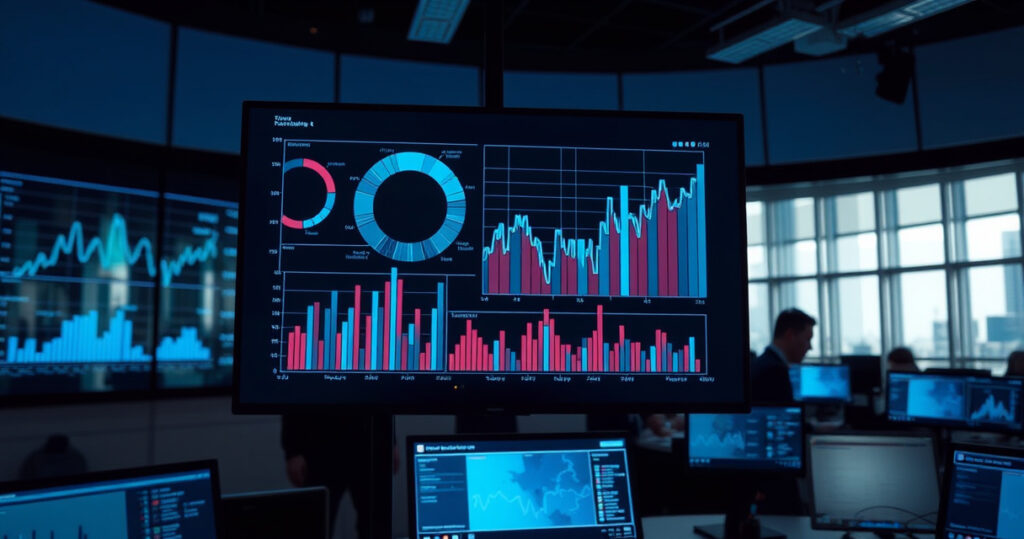
Channelization Drops to 90%: Sweden’s Gambling Regulators Face Enforcement versus Reform Debate
A new Spelinspektionen report reveals that only 90% of Swedish gambling spend now goes through licensed operators, with a record 10% leaking to unlicensed offshore sites. This drop in channelization has reignited a fierce policy debate: should Sweden tighten enforcement through payment blocking and ISP restrictions, or rethink the licensing model itself to reduce the appeal of unlicensed sites?
The Data Behind the Channelization Decline
The Swedish Gambling Authority (Spelinspektionen) published its annual channelization survey in early 2024, showing that the proportion of gambling expenditure flowing through licensed operators fell to 90.2% in 2023, down from 93.3% the previous year. This means approximately one in every ten kronor wagered by Swedish consumers ends up with unlicensed operators — a figure last seen during the first year of the licensing system in 2019.
The report, which covers online casino, sports betting and other verticals, estimates that unlicensed gambling generated around SEK 6.8 billion in gross gaming revenue in 2023. Commercial online casino remains the most leak-prone sector, with a channelization rate of just 76% for that segment alone. The regulator attributes much of the outflow to aggressive marketing by offshore operators offering welcome bonuses and lower tax burdens, which licensed Swedish operators cannot match due to strict regulations. The independent Swedish reference site utländskacasino.se tracks how Sweden regulates offshore casinos and the wider market.
- 2021: 92% channelization (total market SEK 53 billion)
- 2022: 93% channelization (total market SEK 54 billion)
- 2023: 90% channelization (total market SEK 56 billion; unlicensed share SEK 6.8 bn)
These figures have alarmed policymakers and consumer protection groups, who note that unlicensed sites offer none of the mandatory consumer safeguards such as deposit limits, time-out tools, or access to the national self-exclusion register Spelpaus. The Swedish Ministry of Finance has signaled that the target remains a channelization rate of at least 95%.
Sweden’s Licensing Framework and Its Enforcement Challenges
Sweden re-regulated its gambling market in January 2019 under the Gambling Act (2018:1138), creating a licensing system for online casinos, betting, and lotteries. The law requires operators to hold a licence from Spelinspektionen and to comply with strict consumer protection, anti-money laundering, and responsible-gaming requirements. However, unlicensed operators continue to target Swedish players by obtaining licenses in other EU jurisdictions such as Malta, Estonia, or Curaçao, and marketing themselves as “foreign” sites.
The biggest enforcement gap lies in payment blocking. Sweden has introduced a temporary ban on credit card gambling (2021) and a system for Spelinspektionen to order payment intermediaries to block transactions to unlicensed sites. But enforcement is slow: the regulator must individually identify and list each illegal site, and operators often switch payment providers or use cryptocurrency to evade blocks. In 2023, Spelinspektionen issued 18 orders to payment service providers, resulting in the blocking of only 46 domains. Offshore operators simply migrate to new domains and wallets.
A second challenge is cross-border licensing. Under EU law, a company licensed in one member state can theoretically offer services across borders, but member states can restrict this for reasons of public order and consumer protection. Sweden has used this argument to defend its licensing monopoly, but the European Court of Justice has not ruled directly on the issue. A 2023 opinion from the EU Advocate General in a related case suggested that licensing systems with net revenue taxes (such as Sweden’s 18% tax on gross gaming revenue) are permissible as long as they are proportionate. This legal ambiguity leaves Swedish regulators in a grey zone.
Nordic Regulatory Approaches Compared
The Nordic region provides a laboratory of different gambling regulation models. Norway, which is not in the EU, operates a state monopoly (Norsk Tipping and Norsk Rikstoto) and has no licensing for private operators. The Norwegian government uses aggressive technological enforcement — including mandatory DNS blocking of all unlicensed gambling websites and strict payment blocking — achieving a channelization rate of around 95% in recent years. However, Norwegian authorities have faced criticism from free-speech advocates and legal challenges from VPN providers.
| Country | Model | Channelization (approx.) | Key Enforcement Tool |
|---|---|---|---|
| Sweden | Licensing (online since 2019) | 90% (2023) | Payment blocking (list-based) |
| Norway | State monopoly | 95% | DNS + payment blocking |
| Denmark | Licensing (since 2012) | ~85-90% | Payment blocking (order-based) |
| Finland | State monopoly (reforming) | ~80% (estimated) | Weak enforcement; new licensing model by 2026 |
Denmark introduced a partial licensing system in 2012 and has gradually strengthened enforcement, including a court-ordered payment blocking system that targets specific accounts rather than domains. Finland is currently in the process of shifting from its Veikkaus monopoly to a licensing model by 2026, with the explicit goal of regaining control over the roughly 20% of gambling that currently flows to unlicensed sites. The Swedish experience — with channelization declining rather than improving — serves as a cautionary tale for Finnish policymakers.
The Enforcement vs. Reform Policy Debate
Two competing schools of thought have emerged in the Swedish debate. The first — supported by Spelinspektionen, the Ministry for Social Affairs, and many addiction-prevention organisations — argues for stricter enforcement. Proposals include mandatory ISP-level DNS blocking of unlicensed sites (similar to Norway), a ban on foreign-currency gambling accounts, and a legal requirement for payment intermediaries to automatically block any transaction to a site not on Spelinspektionen’s whitelist. This camp points to the success of Norway’s approach, where channelization remains above 95% despite a smaller market.
The opposing view, voiced by some licensed operators and free-market think tanks, argues that enforcement alone is a losing battle. They note that unlicensed operators adapt faster than regulators and that the high Swedish gambling tax (18% on gross revenue) and restrictive bonus rules push consumers toward sites offering better value. Some propose a lower tax rate, liberalised bonus offers, or even a more permissive licensing category for “grey-market” operators. In 2023, a consultant report commissioned by the Swedish Competition Authority suggested that the existing regulatory framework creates a “perverse incentive” for consumers to seek offshore sites.
A third, less publicised view comes from consumer-rights advocates who question whether channelization is the right metric at all. They argue that the focus should be on harm reduction, not market share, and that a certain level of unlicensed gambling may be an inevitable consequence of regulation. The Public Health Agency of Sweden (Folkhälsomyndigheten) reported in 2022 that online gambling participation among people with self-reported risky consumption patterns had increased slightly, but causality with channelization is unclear.
Consumer Protection Implications and the Role of Spelpaus
The most immediate consequence of low channelization is that hundreds of thousands of Swedish consumers are gambling without access to the country’s flagship protection tool: the Spelpaus self-exclusion register. Since 2019, all licensed operators are required to check Spelpaus before opening an account and to exclude any person who has registered. Unlicensed sites, of course, ignore the register entirely. A Swedish study published in 2023 estimated that 15% of unlicensed gamblers had previously self-excluded via Spelpaus, meaning they are actively circumventing the most effective harm-reduction measure.
Furthermore, unlicensed sites typically do not verify player identity as rigorously, exposing consumers to money-laundering risks and leaving them with no recourse if an operator refuses payout. The Consumer Agency (Konsumentverket) has received dozens of complaints from players unable to withdraw winnings from unlicensed casinos. In one case highlighted in a 2022 media investigation, a player lost SEK 450,000 at a site that later shut down without explanation; the operator was not even traceable.
The Swedish government, in its 2023 action plan against illegal gambling, committed to “strengthen Spelpaus” and “increase awareness” of the risks of unlicensed sites. However, without a corresponding increase in channelization, these measures risk being insufficient. The regulator has also proposed legislative amendments to allow for faster domain blocking and to make it a criminal offence for unlicensed operators to target Swedish residents — a step beyond the current civil penalties and fines.
The central question remains: can Sweden achieve 95% channelization through enforcement alone, or is a rethinking of the licensing system necessary? The answer may determine not only the future of the Swedish market but also provide a template — or warning — for other European regulators watching closely.
Sources
- Spelinspektionen – Swedish Gambling Authority (channelization reports, 2023–2024)
- Folkhälsomyndigheten – Public Health Agency of Sweden (problem gambling surveys)
- Riksdagen – Swedish Gambling Act (2018:1138)
- EUR-Lex – EU Payment Services Directive (PSD2) (payment blocking legal framework)
- Konsumentverket – Swedish Consumer Agency (gambling complaint data)
More related posts
 Make a Word with The e Letter : Un cramble & Find Word Fa t
 NCAA 26 Release Date: July 10, Early Access & Price
 How Much Potassium in a Banana? Daily Needs & Top Sources
 24-Hour Walgreens Near Me: Open Now & Locator
 Romans 12:12 – Meaning and Biblical Explanation
 January 1 California Pet Law: What Changes in 2026
 Open Stores Near Me – Maps and Apps to Find Them Now
 2024 Jeep Grand Cherokee: Pricing, Specs, Reliability & Common Problems