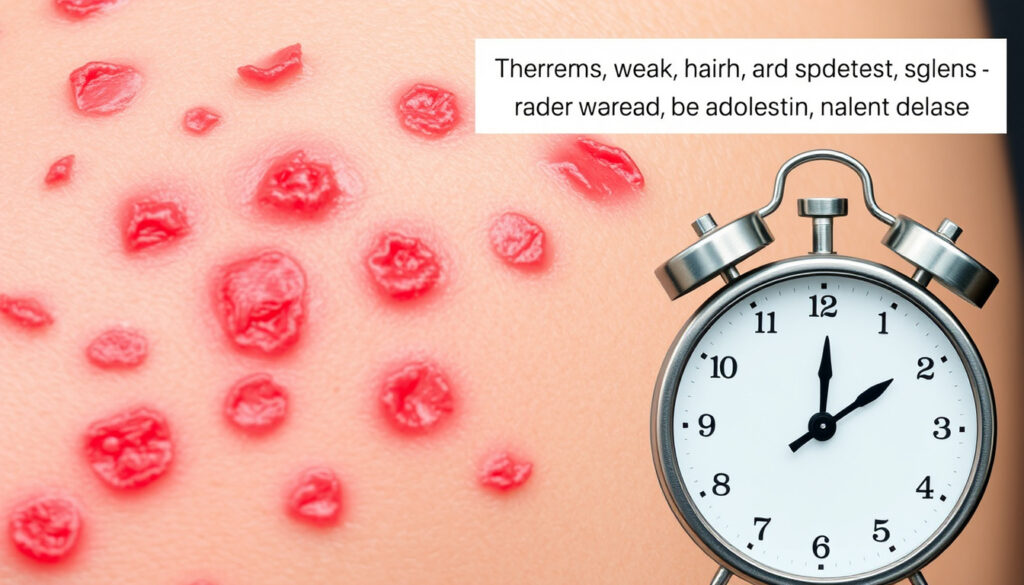
How Long Does Shingles Last? Duration, Worst Days & Contagious Period
Few things test your patience like a rash that burns, stings, and simply won’t let up. If you’re wondering how long shingles lasts, you’re probably in the middle of that uncomfortable wait — or dreading it. The shingles timeline stretches from the first tingle to the last scab, typically taking 3 to 5 weeks from start to finish, with the worst pain hitting around day 4 or 5 after the rash appears. This article breaks down each stage day by day, so you know exactly what to expect and when to call a doctor.
Typical shingles duration: 3 to 5 weeks ·
Rash blisters scab over by: 7 to 10 days ·
Rash completely clears by: 2 to 4 weeks ·
Postherpetic neuralgia risk: 10–18% of patients ·
Contagious period: Until blisters fully crusted
Quick snapshot
- Prodromal phase: 2–3 days before rash (NHS (UK health authority))
- Rash active: 7–10 days, blisters scab (New York State Department of Health (state health regulator))
- Full healing: 2–4 weeks (CDC (US public health agency))
- Pain may persist weeks or months (Mayo Clinic News Network (leading medical research center))
- Pain peaks 4–5 days after rash (CDC (US public health agency))
- Blisters most painful days 2–4 (New York State Department of Health (state health regulator))
- Postherpetic neuralgia possible (Elm Trees Surgery NHS leaflet (UK primary care guidance))
- Antivirals within 72 hours shorten duration 1–2 days (CDC (US public health agency))
- Pain relievers and cool compresses help (NHS (UK health authority))
- Vaccine reduces risk and severity (CDC (US public health agency))
- From rash onset until all blisters crusted (CDC (US public health agency))
- Average 7–10 days (GoodRx (health information platform))
- Avoid contact with pregnant women and immunocompromised (New York State Department of Health (state health regulator))
Six key facts that define the shingles timeline, one pattern: the clock starts ticking from the first blister, and every stage — pain, contagion, and recovery — follows a predictable schedule backed by public health data.
| Metric | Value |
|---|---|
| Typical duration | 3 to 5 weeks |
| Blisters scab over | 7 to 10 days |
| Rash clears | 2 to 4 weeks |
| Contagious period | Until blisters are fully crusted |
| Worst pain day | Day 4 to 5 after rash appears |
| PHN risk over 60 | Up to 30% |
How Long Does Shingles Last?
Shingles duration without treatment
- Without antivirals, shingles follows its natural course: prodrome (2–3 days of tingling or pain), then rash (7–10 days of blistering), then crusting and healing (2–4 weeks). Total: 3–5 weeks (New York State Department of Health).
- The rash blisters scab over in 7 to 10 days, and lesions clear completely within 2 to 4 weeks (CDC (US public health agency)).
- Pain may persist after the rash clears, especially in older adults (Elm Trees Surgery NHS leaflet).
Shingles duration with antiviral medication
- Antiviral treatment (acyclovir, valacyclovir, or famciclovir) is most effective when started within 72 hours of symptom onset (CDC (US public health agency)).
- Treatment can shorten the duration of the rash by 1–2 days and reduce the contagious period to about 5–8 days (GoodRx (health information platform)).
- Early antivirals cut the risk of postherpetic neuralgia by 50% (Mayo Clinic News Network).
Shingles duration on face vs body
- Exact differences are not well established in large studies, but facial shingles (especially near the eye) may heal more slowly due to higher nerve density and risk of complications like herpes zoster ophthalmicus (CDC).
- The same antiviral window (72 hours) applies regardless of location (NHS (UK health authority)).
What Are the Worst Days of Shingles?
Pain peak timeline
- Pain often peaks 4–5 days after the rash appears (CDC (US public health agency)).
- Prodromal pain (days 1–3 before the rash) can be severe and is often mistaken for a pulled muscle or migraine (NHS (UK health authority)).
Rash progression and worst discomfort
- Blisters are most painful on days 2–4 after they appear (New York State Department of Health).
- After day 5, pain typically begins to subside as blisters dry and crust over (Houston Methodist (hospital system)).
For most patients, the combination of peak blistering and maximum nerve pain lands on day 4 or 5. That’s the day to plan for with stronger pain relief and time off from work.
How Long Is Someone with Shingles Contagious?
Contagious window explained
- A person with shingles is contagious from the moment the rash appears until all blisters have fully crusted over — typically 7–10 days (CDC (US public health agency)).
- Transmission is only of the varicella zoster virus (chickenpox virus), not shingles itself. Someone who has never had chickenpox or the vaccine can catch chickenpox from direct contact with the fluid (New York State Department of Health).
- Airborne transmission is not typical; the main risk is direct contact with open blisters (CDC).
When is it safe to be around others?
- You are no longer contagious once all blisters have dried and scabbed over. This usually happens 7–10 days after the rash first appears (Houston Methodist).
- If you take antivirals, the contagious window may shorten to 5–8 days (GoodRx).
- Keep the rash covered and avoid close contact with pregnant women, newborns, and immunocompromised people until the scabs are dry (New York State Department of Health).
The contagious period is short — about a week — but it’s strict. One open blister, and you’re still infectious. The moment the last blister crusts, you’re safe. No grace period before that.
What Triggers Shingles to Flare Up?
Common triggers
- Shingles is a reactivation of the varicella zoster virus that has been dormant in nerve roots since a chickenpox infection (CDC (US public health agency)).
- Common triggers include aging (especially after 50), stress, immunosuppression from illness or medications, and physical trauma (NHS (UK health authority)).
Risk factors for reactivation
- Age is the strongest risk factor: the incidence rises sharply after 50, and more than half of cases occur in people over 60 (CDC).
- Immunocompromised individuals (from cancer, HIV, organ transplant, or long-term steroids) are at higher risk (CDC).
- Shingles is not caused by poor hygiene or by contact with someone who has shingles (NHS).
If you’re over 50 and have had chickenpox, your immune system’s natural decline over decades is the primary trigger. Stress and illness act as accelerants, but the real driver is time.
Will Shingles Clear Up by Itself?
Risks of letting shingles run its course
- Shingles will clear without treatment in most immunocompetent people, but the risk of postherpetic neuralgia (PHN) is significantly higher without antivirals (CDC (US public health agency)).
- PHN pain can last for months or even years after the rash heals, particularly in older adults (Elm Trees Surgery NHS leaflet).
- Leaving shingles untreated also extends the contagious window, as the rash may take longer to crust (New York State Department of Health).
When to seek medical help
- See a doctor within 72 hours of rash onset to get the most benefit from antivirals (CDC).
- Seek immediate care if the rash is near your eye, if you have a weakened immune system, or if the pain is severe (NHS).
- Even after 72 hours, antivirals may still help reduce pain and speed healing (GoodRx).
Upsides
- Shingles resolves on its own in most people within 3–5 weeks.
- Antivirals are widely available and effective when started early.
- The contagious period is short (7–10 days) and easily managed.
- Vaccination (Shingrix) dramatically reduces risk and severity.
Downsides
- Without treatment, PHN risk is high, especially over 60.
- The 72-hour treatment window is tight and easily missed.
- Pain can be severe and debilitating even during the rash phase.
- Facial shingles carries risks of eye complications.
Shingles Timeline: Day by Day
Six stages of shingles, one pattern: each phase has a distinct duration and activity level, and the contagious window is strictly tied to the rash’s crusting.
- Day 1–3 (prodrome): Pain, tingling, burning, or numbness in a dermatome. No rash yet. (NHS)
- Day 3–5 (rash onset): Red rash appears, blisters form. Pain may intensify. (New York State Department of Health)
- Day 4–5 (pain peak): Pain and blistering are most severe. (CDC)
- Day 7–10 (crusting): Blisters begin to dry, scab over. Contagious until fully crusted. (CDC)
- Week 2–4 (healing): Rash fades, scabs fall off. Pain may reduce. (New York State Department of Health)
- Week 4+ (recovery): Skin heals. Some patients have PHN pain persisting months or years. (Elm Trees Surgery NHS leaflet)
Confirmed Facts vs. What’s Unclear
Confirmed facts
- Shingles duration is 3–5 weeks in most patients (CDC).
- Antiviral treatment within 72 hours reduces duration and PHN risk (CDC).
- Contagious until blisters are fully crusted (New York State Department of Health).
- Pain peaks around day 4–5 after rash onset (CDC).
What’s unclear
- Exact duration on face vs. body is not precisely established in large studies (CDC).
- Young adults may heal faster, but data is limited (NHS).
- Effectiveness of antivirals after 72 hours is still debated (GoodRx).
Expert Perspectives on Shingles
“The rash consists of blisters that typically scab over in 7 to 10 days, clearing up within 2 to 4 weeks.”
CDC (US public health agency)
“Shingles is contagious from the time the rash appears until the blisters have fully crusted.”
New York State Department of Health (state health regulator)
“Shingles pain can last for weeks or months after the rash clears, especially in older adults.”
The pattern across these sources is clear: shingles follows a predictable trajectory, but the stakes — especially for postherpetic neuralgia — make early treatment the only responsible choice. For patients over 60, the risk of PHN is up to 30%, and the 72-hour antiviral window is the single best chance to avoid long-term pain. For everyone else, the decision is about speed: the faster you act, the shorter the ordeal.
kingsfoldmedicalcentre.co.uk, todaysgeriatricmedicine.com, cdc.gov, webmd.com, healthline.com
For more details on how the virus spreads, this article explains the different shingles transmission routes and the associated risks.
Frequently asked questions
Can shingles kill you?
Shingles itself is rarely fatal, but complications such as pneumonia, encephalitis, or bacterial skin infections can be serious, especially in immunocompromised individuals. Seek prompt medical care if symptoms worsen.
How do I know if I have shingles or something else?
The classic sign is a painful, blistering rash on one side of the body, often preceded by tingling or burning. A healthcare provider can confirm it with a visual exam or lab test.
What is the best painkiller for shingles?
Over-the-counter options like ibuprofen or acetaminophen can help. For severe pain, doctors may prescribe gabapentin, pregabalin, or lidocaine patches. Always consult a doctor before starting new pain medication.
How long do I need to stay home from work with shingles?
You should stay home until all blisters have crusted over — usually 7–10 days. If you can keep the rash covered and you work alone, you may return earlier, but avoid contact with vulnerable people.
Can shingles come back?
Yes, shingles can recur, though it’s uncommon in healthy individuals. The risk increases with age and immunosuppression. The Shingrix vaccine reduces recurrence risk.
Is stress a trigger for shingles?
Yes, emotional stress is a well-known trigger. It can weaken the immune system and allow the dormant virus to reactivate.
When should I get the shingles vaccine?
The CDC recommends Shingrix for adults aged 50 and older, and for immunocompromised adults aged 19 and older. Two doses are given 2–6 months apart.
Related reading: How Do You Get Shingles? Causes, Symptoms, and Treatment · Antibiotics for Sinus Infection: When You Need Them and When You Don’t
More related posts
 TPG Products SBTPG LLC Deposit: What It Means
 A Child Called It: Fact Check, Controversy, and Reader’s Guide
 Where to Get Passport Photos: Best Places & DIY Guide
 Best Mazamorra Morada Near Me – Top NYC Spots and Authenticity Guide
 Samsung Galaxy M54 to Buy: Price, Specs & Review 2025
 Portugal vs Denmark Lineups: Start XI, Result & Analysis
 Secret of the Mimic – Guide to Gameplay, Secrets and Lore
 Whole Life Insurance Policy: Cost, Pros/Cons & Expert Insights