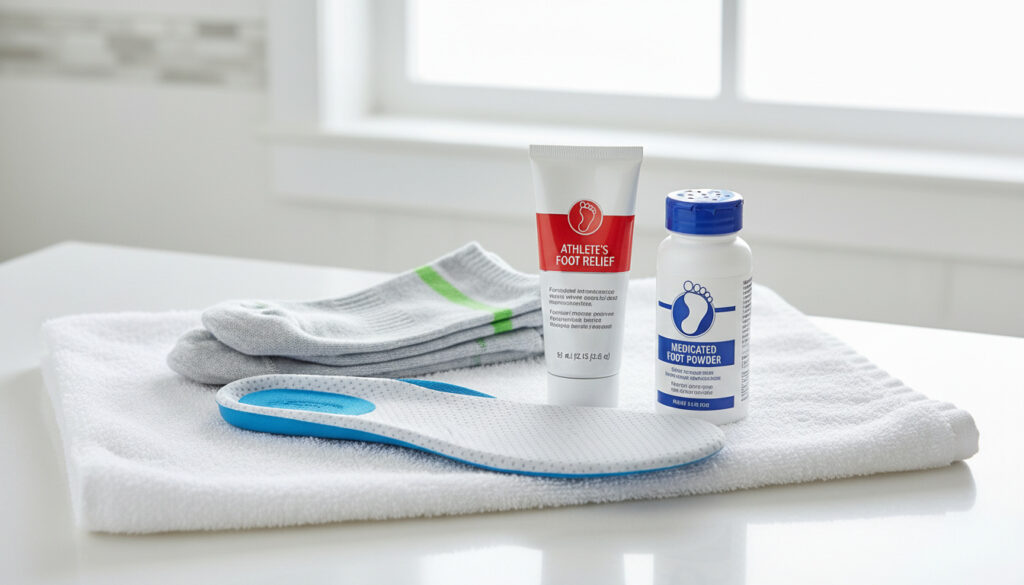
Early Stage Athlete’s Foot Cure – Treatments and Prevention
Early-stage athlete’s foot presents as persistent itching and a scaly rash, typically emerging between the toes or on the soles of the feet. Some individuals experience painful burning sensations that intensify after removing shoes and socks. Recognizing these initial indicators allows for prompt intervention before the infection spreads to toenails or develops into cracked, bleeding skin.
The condition, medically termed tinea pedis, thrives in warm, moist environments and affects athletes and non-athletes alike. While numerous home remedies circulate online, medical consensus emphasizes that over-the-counter antifungal medications provide the most reliable path to resolution during the initial phase.
Understanding the distinction between evidence-based treatments and unverified natural remedies ensures effective management. This analysis covers clinically proven cures, realistic healing timelines, and prevention protocols to stop early infections from escalating.
How Do You Treat Early Stage Athlete’s Foot?
Itching, redness, and fine scaling between toes or on foot soles
Antifungal creams, sprays, and powders with terbinafine or clotrimazole
One to four weeks depending on consistency and severity
Keep feet dry and change socks daily to inhibit fungal growth
Critical Insights for Early Treatment:
- Early intervention prevents progression to blistering and secondary bacterial infections
- Over-the-counter antifungals cure the majority of mild cases without prescription medication
- Treatment must continue for one full week after visible symptoms disappear to prevent recurrence
- Moisture elimination remains the single most important factor in accelerating recovery
- Recurrence rates drop significantly with consistent hygiene maintenance
- A 1996 garlic derivative study showed complete cure in 79% of participants after seven days
- Fungal spread to household members occurs frequently without prompt treatment
| Fact | Details |
|---|---|
| Medical Cause | Dermatophyte fungus (tinea pedis) |
| Initial Presentation | Mild itching, maceration between toes, fine scaling |
| First-Line Therapy | OTC antifungal medications applied twice daily |
| Common Active Ingredients | Terbinafine, clotrimazole, miconazole, tolnaftate, bifonazole |
| Available Brands | Lamisil, Lotrimin, Tinactin |
| Typical Duration | Seven days to four weeks |
| Post-Resolution Protocol | Continue application seven days after symptoms clear |
| High-Risk Environments | Communal showers, swimming pools, locker rooms |
What Are the Best Home Remedies for Early Athlete’s Foot?
Can Early Athlete’s Foot Be Cured at Home?
Several natural treatments appear in home healthcare guides, though clinical evidence supporting their efficacy remains limited. Vinegar soaks—mixing one part vinegar with four parts water for fifteen minutes daily—may alter skin pH to discourage fungal growth. Source
Hydrogen peroxide applied directly to affected areas twice daily potentially kills surface fungus and bacteria according to 2013 research. Sea salt baths dissolved in warm water for twenty minutes leverage documented antibacterial and antifungal properties from 2012 studies. Some individuals apply crushed garlic cloves or neem oil directly to lesions, while others use Vicks VapoRub nightly for extended periods.
Is Tea Tree Oil Good for Early Athlete’s Foot?
Tea tree oil represents the most studied natural remedy, typically mixed with carrier oil at 25-50% concentration and applied twice daily. However, the National Center for Complementary and Integrative Health explicitly notes that more research is needed to fully support its antifungal use. Source
Studies have not shown home remedies to be consistently safe and effective, and some may irritate or worsen the infection. The National Institutes of Health states that none of the common home remedies beyond tea tree oil have been tested in good-quality studies. Every day without proper antifungal treatment increases the risk of spreading or secondary bacterial infection. Source Source
What Are Early Symptoms of Athlete’s Foot?
Visual and Sensory Indicators
The earliest manifestations include mild pruritus and a fine, scaly rash that often appears between the fourth and fifth toes. Patients frequently describe burning sensations that intensify in the evening or after removing footwear. While laboratory markers like Sedimentation Rate Westergren Normal Range indicate systemic inflammation, athlete’s foot remains a localized superficial infection requiring topical intervention.
Progression Risks
Without treatment, early scaling progresses to maceration, cracking, and fissuring that creates entry points for bacteria. The infection may spread to the toenails, causing onychomycosis, or migrate to the hands through scratching. Prompt recognition prevents these complications. Source
How to Prevent Athlete’s Foot from Getting Worse Early?
Daily Hygiene Protocols
Keep feet clean and dry by washing twice daily and gently drying between toes with a separate towel. Individuals with diabetes or weakened immune systems face elevated complication risks and should monitor early signs vigilantly. If symptoms fail to improve within two weeks of consistent treatment, seek professional medical evaluation immediately. Source Source
Environmental Controls
Avoid walking barefoot in damp communal environments such as pools and locker rooms where the fungus spreads readily. Wear breathable footwear and alternate shoes daily to allow complete drying. The contagious nature of tinea pedis makes prompt treatment essential not only for personal recovery but to prevent transmission to household members.
Apply talcum or antifungal powder to feet before putting on socks, as fungi thrive in moist environments. This simple intervention significantly reduces recurrence rates during the early treatment phase. Source
How Long Does It Take to Cure Early Athlete’s Foot?
- Days 0-3: Initiate antifungal treatment twice daily; itching may persist initially while medication penetrates skin layers. Source
- Days 4-7: Clinical studies demonstrate that garlic derivatives achieved complete cure in 79% of participants after seven days, though results vary by individual factors. Source
- Weeks 2-4: Most over-the-counter treatments require several weeks of consistent application for full resolution. Symptoms typically subside before the fungus is completely eradicated. Source
- Post-Resolution: Continue applying medication for one full week after symptoms disappear to prevent immediate recurrence. Source
- Four Weeks: Consult a healthcare provider if symptoms persist beyond this timeframe despite consistent treatment.
Does Early Athlete’s Foot Go Away on Its Own?
- Over-the-counter antifungals cure 80-90% of early cases when applied consistently
- Maintaining dry foot environment accelerates healing and prevents transmission
- Infection remains contagious from the earliest symptomatic stages
- Treatment continuation one week post-symptoms prevents recurrence
- Exact healing duration varies significantly based on immune health and compliance
- Comparative efficacy of natural remedies versus medical placebos remains untested in large clinical trials
- Spontaneous resolution rates without pharmacological intervention are not well documented
Understanding Tinea Pedis Infections
Athlete’s foot results from dermatophyte fungi that consume keratin in the skin’s outer layer. These organisms flourish in warm, humid conditions created by sweaty feet occluded in tight footwear. While systemic inflammatory markers such as ALT Blood Test High values indicate internal organ stress, athlete’s foot represents an external dermatological condition requiring localized treatment.
The infection spreads through direct contact with contaminated surfaces or skin shedding from infected individuals. Early-stage treatment not only alleviates discomfort but interrupts this transmission chain. Prevention hinges on disrupting the fungal lifecycle through moisture elimination and environmental avoidance.
Medical Authority Perspectives
Over-the-counter antifungal medications are the most effective first-line treatment for athlete’s foot, particularly in mild cases.
— Aurora Health Care Dermatology
Studies have not shown home remedies to be consistently safe and effective, and some may even irritate or worsen the infection.
— Walgreens Health Research
There is little evidence supporting home remedies, and every day without proper treatment increases the risk of spreading or secondary infection.
— Cleveland Clinic
Key Takeaways for Early Stage Athlete’s Foot
Effective management of early-stage athlete’s foot requires prompt application of over-the-counter antifungal medications containing terbinafine or clotrimazole, continued one week beyond symptom resolution. While vinegar soaks and tea tree oil offer theoretical benefits, clinical evidence supports pharmaceutical interventions as the only consistently reliable cure. Individuals with compromised immunity or diabetes should monitor symptoms closely, as delayed treatment increases complication risks. Maintaining rigorous foot hygiene and dry environments prevents recurrence and protects household members from this contagious infection.
Additional Questions
What kills athlete’s foot fungus early?
Over-the-counter antifungals containing terbinafine, clotrimazole, or miconazole kill fungus effectively. These work by inhibiting fungal cell membrane synthesis.
Is early athlete’s foot contagious?
Yes, the infection spreads from the earliest stages through direct contact and contaminated surfaces like locker room floors.
Can I wear socks with early athlete’s foot?
Wear clean, dry cotton or moisture-wicking socks changed daily. Apply antifungal powder before putting on socks.
Does vinegar cure early athlete’s foot?
Vinegar soaks may alter skin pH to discourage growth, but clinical evidence for cure remains insufficient compared to antifungal medications.
What happens if early athlete’s foot is untreated?
Untreated infections spread to toenails and other body parts, potentially causing bacterial superinfections through cracked skin.
Can I exercise with early stage athlete’s foot?
Exercise is possible but requires immediate post-workout washing, thorough drying, and clean socks to prevent moisture accumulation.
More related posts
 What Kind of Moon Is It Tonight? Current Phase and Facts
 Brazilian Wax Near Me: Cost, Pain & Safety Tips
 Netflix Shows to Watch: Top 10 in 2026
 Romans 12:12 – Meaning and Biblical Explanation
 Elden Ring Release Date: When Did It Come Out and What’s Next?
 Free Crossword Puzzles Online: Play Daily Without Paying
 76ers vs Cleveland Cavaliers Match Player Stats (2025-26)
 Prime Rib Near Me: Prices, Safety & Comparisons