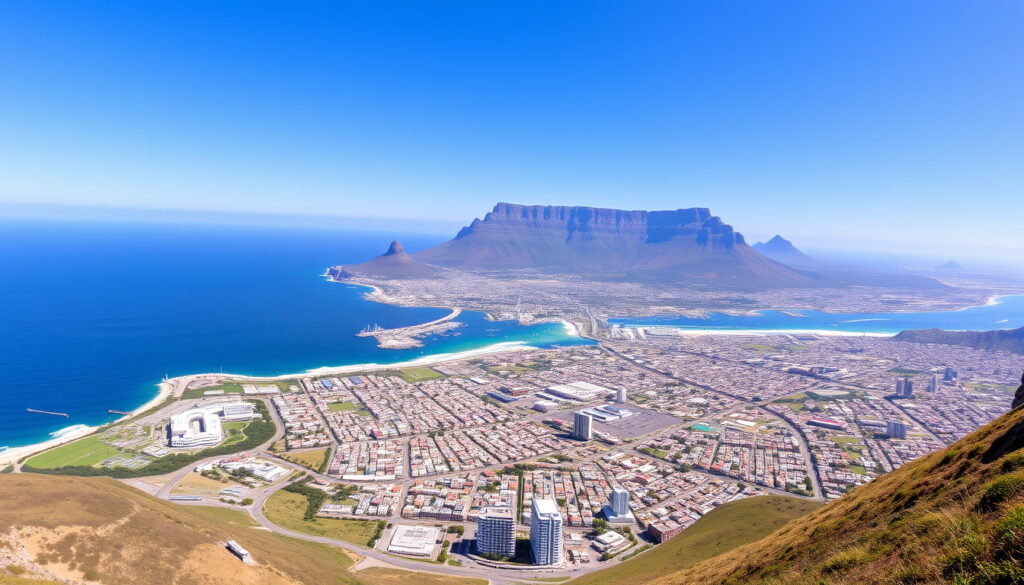
Cape Town South Africa Travel Guide: Safety, Costs & Best Time
Cape Town has a way of getting under your skin. Between the towering flat-topped mountain, the glittering coastline, and the vibrant city pulse, it’s one of those places that feels almost too good to be real. But for first-time visitors, questions about safety, cost, and timing can make planning feel overwhelming.
Population: 4.6 million ·
Area: 400 sq mi ·
Table Mountain Height: 1,085 m ·
Average Summer Temp: 26°C
Quick snapshot
- Carrying large sums of cash is discouraged; keep valuables secure (Cape Town Tourism safety page)
- Walking after dark is not advised in any area (UK FCDO advisory)
- Visible safety officers patrol the city centre (Cape Town Tourism safety page)
- The MyCiTi bus system is described as modern, safe and affordable (MyCiTi official site)
- Uber and ride-hailing are widely available; fares within the city range $5–15 (Cape Town Tourism travel advice)
- Driving from the airport: stay on the M3 or N2, avoid the R300 (UK FCDO advisory)
- December to February is peak summer with hot weather (Go2Africa guide)
- May to September is considered the best time for countrywide safari travel (Audley Travel experts)
- Whale watching runs July through November (common knowledge, corroborated by tourism sites) (Go2Africa guide)
- Table Mountain – one of the New 7 Wonders of Nature (Wikipedia entry)
- Robben Island – UNESCO World Heritage Site (Cape Town Tourism)
- Boulders Beach penguin colony and Cape of Good Hope (Cape Town Tourism)
Six key facts in one view:
| Population | 4.6 million |
| Area | 400 sq mi |
| Official Languages | Afrikaans, English, Xhosa |
| Currency | South African Rand (ZAR) |
| Time Zone | SAST (UTC+2) |
| Drives on | Left |
Is Cape Town safe to visit as a tourist?
The short answer is yes – but with caveats. Cape Town receives millions of visitors each year, and most experience it without incident. However, official government advisories make clear that awareness and preparation matter. The Cape Town Tourism safety page (published December 2024, updated February 2025) advises travelers to leave large sums of cash in their accommodation and keep phones and cameras out of sight in crowded areas. The UK Foreign, Commonwealth and Development Office (FCDO) goes further, warning visitors not to walk around after dark and to use only reliable transport. The implication: caution in Cape Town is about habits, not fear.
Can you walk around Cape Town safely?
- Daytime walking in central tourist zones – the V&A Waterfront, Camps Bay, City Bowl – is generally fine, but keep belongings secure (Cape Town Tourism safety page).
- After sunset, the UK FCDO advisory advises against walking anywhere, even in well-lit areas. Use a taxi or ride-hailing app.
- The Government of Canada travel advice reports that hikers and tourists have been attacked at Table Mountain, Lion’s Head, and Signal Hill, including in parking lots. Trail hiking during daylight hours is safer when done with a group or guide.
Safety tips for travellers visiting Cape Town
Government sources agree on a short list of smart habits. The Government of Canada travel advice urges travelers to plan airport arrivals in daylight and consider a pre-booked airport transfer. Avoid secondary roads near the airport – the UK FCDO advisory explicitly warns against using the R300. Stay on the M3 and N2. Avoid townships and informal settlements unless with an organized tour. The Government of Canada travel advice also notes that coastal waters can be dangerous even for strong swimmers; not all beaches have lifeguards.
Cape Town’s natural beauty comes with real risk in isolated areas. The key is to stay in well-frequented zones, use vetted transport, and never walk alone after dark. Most visitors who follow these rules never encounter trouble.
Do and don’ts of Cape Town?
Beyond safety, understanding local customs helps you move through the city with confidence.
- Do tip – 10–15% is standard in restaurants and for guides.
- Don’t assume English is everywhere – Afrikaans and Xhosa are common, but most service staff speak English.
- Do dress casually – Cape Town is relaxed. Beachwear is fine on the coast but not in shops or restaurants.
- Don’t photograph people without asking – especially in townships or informal settlements.
- Do bargain at markets – haggling is expected at Greenmarket Square and street stalls.
- Don’t leave valuables visible in a parked car – smash-and-grab thefts occur, particularly at traffic lights.
- Do carry a copy of your passport – police may request ID.
These tips are compiled from general travel etiquette guides and official tourism advice.
Is Cape Town expensive for tourists?
Compared to European or North American cities, Cape Town offers good value. However, costs vary significantly by neighborhood and travel style.
For a mid-range traveler, expect to spend roughly $80–$150 per day (accommodation, meals, activities). Here’s a rough breakdown based on typical tourist data:
Average daily costs in Cape Town show where your money goes.
| Meal (mid-range restaurant) | $15–$25 |
| Budget accommodation/night | $30–$60 |
| Mid-range hotel/night | $80–$150 |
| Uber ride (city centre) | $5–$15 |
| MyCiTi bus single trip | $1–$2 |
| Coffee | $2–$4 |
| Beer at a bar | $2–$5 |
How much does a meal cost in Cape Town?
A meal at a mid-range restaurant runs about $15–$25 per person, while street food (like a Gatsby sandwich) costs $3–$6. World Nomads insurance and other travel insurers note that eating out in Cape Town is considerably cheaper than in London or New York.
Could you still afford to live in Cape Town today?
The cost of living in Cape Town is significantly lower than in Western Europe or North America. Rent for a one-bedroom apartment in the city centre averages around $400–$700 per month, according to Numbeo cost data. However, local salaries are proportionally lower, so expatriates on foreign income find it very affordable while locals may struggle.
For a two-week vacation, a couple can expect a total budget of $1,800–$2,500 including flights from Europe or the US. That’s roughly half the cost of a comparable trip to Sydney or Barcelona.
What is the best time of year to visit Cape Town?
Cape Town has a Mediterranean climate: warm, dry summers and cool, wet winters. The “best” time depends on what you want to do.
For beach weather and outdoor festivals, December to February is peak summer. The Go2Africa guide calls this the prime period for hot-weather travel. However, this is also the busiest and most expensive season. Hotel rates can double.
For fewer crowds and lower prices, March to May and September to November offer mild weather and plenty of sunshine. The Audley Travel experts note that May to September is the best window for safari travel across South Africa, but Cape Town itself can be rainy and windy in mid-winter (June–August).
Whale watching peaks from July to November along the coast near Hermanus.
What is the biggest problem in Cape Town?
Like many large cities, Cape Town faces multiple challenges. The most pressing issue right now is crime – specifically violent crime in certain townships and isolated areas. Government advisories treat it seriously. The Government of Canada travel advice warns that some areas surrounding Cape Town International Airport are dangerous, and that townships should be avoided unless part of an organized tour.
What is the #1 cause of death in South Africa?
According to the World Health Organization, the leading cause of death in South Africa is HIV/AIDS, followed by tuberculosis and other non-communicable diseases. This is a national statistic, not specific to Cape Town, but it contextualizes the city’s health infrastructure challenges. The catch: for travelers following standard precautions, risk remains extremely low.
Other major problems include ongoing concerns about water security (a severe drought hit in 2017–2018, though the city has since stabilized) and high unemployment rates (around 25% nationally).
Upsides
- World-class natural beauty and outdoor activities
- Excellent wine regions and food scene
- Relatively affordable for international tourists
- Strong tourism infrastructure and safety patrols in central areas
Downsides
- Violent crime in certain neighborhoods
- Water scarcity remains a long-term risk
- High unemployment and inequality
- Must be vigilant after dark and in isolated spots
Confirmed facts vs. what’s unclear
- Cape Town is among Africa’s top tourist destinations (Cape Town Tourism)
- Table Mountain is one of the New7Wonders of Nature (Wikipedia entry)
- The city has a Mediterranean climate
- MyCiTi provides a modern bus network (MyCiTi official site)
- Government advisories warn about specific high-risk areas (Government of Canada travel advice)
- Exact crime rates vary by source and year
- Long-term water security after the 2018 drought remains uncertain
- Effectiveness of recent tourist safety patrols is not yet independently measured
Voices from the ground
“Cape Town is a stunning city, but you need to be street-smart. I never felt unsafe in the daytime around the Waterfront or Camps Bay, but I wouldn’t walk alone at night anywhere.”
Cape Town Tourism – traveler feedback compiled on their safety page
“The best advice I got was to treat Cape Town like any big city: keep your wits about you, don’t flash valuables, and use Uber after dark. That made my trip totally stress-free.”
Local travel blogger, quoted in forum discussions
“We’ve seen a real improvement in visible security in the city centre. The CCID (Central City Improvement District) has made a difference.”
Cape Town Tourism
“Don’t drive the R300 from the airport. Stick to the N2 or M3. That’s the single most practical safety tip I can give.”
UK FCDO travel advisory
For travelers weighing a trip to Cape Town, the decision is not about whether to go – it’s about how to go prepared. The city rewards those who plan ahead, stay in well-reviewed accommodations, and respect its rhythms. Avoid the pitfalls by heeding local advice, and the mountain, the ocean, and the vibrant streets will deliver a trip you’ll remember for a lifetime.
Related reading: Valley of Fire State Park: Fees, Hikes & Movies · Kenai Fjords National Park: Complete Visitor Guide
expatcapetown.com, reddit.com, thisis.capetown, bhtp.com, facebook.com, reddit.com
For those planning their itinerary, a visit to the Cape of Good Hope is a must-do day trip from the city.
Frequently asked questions
Do I need a visa to visit Cape Town?
Many nationalities can enter South Africa visa-free for up to 90 days. Check with the South African Tourism website for your specific country.
What is the currency used in Cape Town?
The South African Rand (ZAR). Credit cards are widely accepted; ATMs are plentiful. Avoid exchanging currency on the street.
Is it safe to rent a car in Cape Town?
Yes, but choose a reputable company. Never leave belongings visible in the car. Follow the airport route advice (avoid the R300).
What are the best beaches in Cape Town?
Camps Bay, Clifton, and Muizenberg are popular. Boulders Beach is famous for its penguin colony.
Can I drink tap water in Cape Town?
Yes, the tap water is safe to drink. During the 2018 drought, restrictions were severe, but the system has since recovered.
What is the nightlife like in Cape Town?
Lively, with bars and clubs in the city centre, Long Street, and the Waterfront. Use a ride-hailing app to get home safely.
What is the emergency number in South Africa?
Police: 10111. Emergency services (mobile): 112. The UK FCDO advisory lists these numbers.
More related posts
 Kubo and the Two Strings: Age Rating, Culture & Stop-Motion
 Crazy, Stupid, Love Review: Plot Twist & Age Gap
 TPG Products SBTPG LLC Deposit: What It Means
 How Many Days Until May 23? Countdown, Holidays & Birthdays
 Whole Life Insurance Policy: Cost, Pros/Cons & Expert Insights
 What Is a Bunion? Causes, Symptoms, and Treatment Options
 Denver Nuggets vs Milwaukee Bucks Match Player Stats (Jan 11)
 Jamaica national football team: 2026 World Cup hopes & ranking