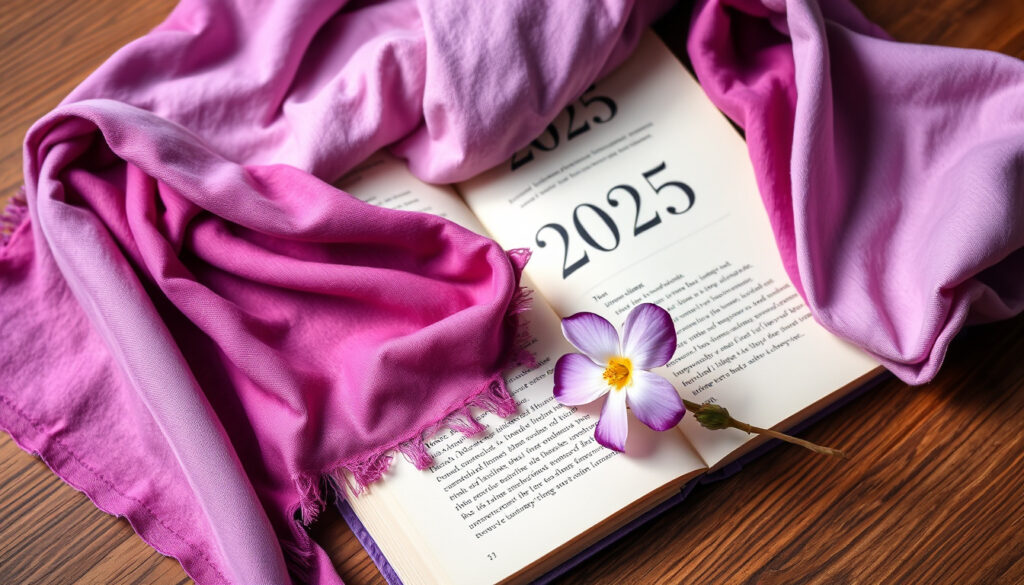
International Women’s Day 2025: Theme, Color, History
Every March 8, the world pauses to recognize women’s achievements and the work still needed for equality. For 2025, the International Women’s Day campaign carries a theme that captures the urgency: “Accelerate Action.”
Date: March 8, 2025 · Campaign Theme: Accelerate Action · UN Theme: For ALL women and girls: Rights. Equality. Empowerment. · Official Color: Purple · First Celebrated: 1911
Quick snapshot
- Date: March 8, 2025 (Wikipedia (general reference))
- Campaign theme: “Accelerate Action” (International Women’s Day Official Site (campaign authority))
- UN theme: “For ALL women and girls: Rights. Equality. Empowerment.” (United Nations (official UN observances))
- Official color: Purple (Wikipedia (color symbolism))
- The global official flower of IWD is not standardized – mimosa is traditional in Italy, but no single flower is universally recognized (Wikipedia (regional traditions)).
- The exact list of “5 rights of a woman” varies among human rights organizations and is not codified in a single international document. (Wikipedia (regional traditions))
- First IWD observed: 1911 (Wikipedia (history))
- Date fixed as March 8: 1913 (Wikipedia (date fixation))
- UN official celebration starts: 1975 (Wikipedia (UN involvement))
- IWD 2026 theme: “Rights. Justice. Action. For ALL Women and Girls” (United Nations (future theme))
- UN CSW70 scheduled for March 9-19, 2026 (United Nations (CSW70 announcement))
Here is a compact overview of the essential facts for International Women’s Day 2025 — seven key items, and one recurring pattern: the intersection of historical roots with forward-looking campaigns.
| Attribute | Value |
|---|---|
| Date | March 8, 2025 |
| Campaign Theme | Accelerate Action |
| UN Theme | For ALL women and girls: Rights. Equality. Empowerment. |
| Official Color | Purple |
| Proposed by | Clara Zetkin (1910) |
| First Celebrated | 1911 |
| Associated Flowers | Mimosa (Italy), Lily, Rose |
The “Accelerate Action” theme directly confronts a grim projection: at current pace, full gender parity won’t be reached until 2158 — roughly five generations from now, according to the World Economic Forum data cited by the official IWD site. This is not a symbolic banner; it’s a clock ticking for policymakers and employers worldwide.
What is the theme for International Women’s Day 2025?
The official campaign theme for International Women’s Day 2025 is “Accelerate Action”, as confirmed by the International Women’s Day website (official campaign authority). The theme emphasizes the urgency of taking swift, concrete steps to accelerate progress toward gender equality. This includes forging women’s economic empowerment, developing diverse talent pipelines, and promoting leadership roles in STEM fields.
What is the UN theme for IWD 2025?
- The United Nations theme for IWD 2025 is “For ALL women and girls: Rights. Equality. Empowerment.” (United Nations (official UN observance page)).
- The theme aligns with the Commission on the Status of Women (CSW) priorities and the Beijing+30 review.
While the UN frame is broader, the “Accelerate Action” campaign narrows the focus on speed. WILPF (Women’s International League for Peace and Freedom, a peace advocacy organization) also backed the “Accelerate Action” message, underlining the need to eliminate systemic barriers with urgency.
What are key quotes for IWD 2025?
“On 8 March 2025, join us to celebrate International Women’s Day under the theme, ‘For ALL women and girls: Rights. Equality. Empowerment.'”
– United Nations (official announcement)
“IWD 2025 campaign theme was ‘Accelerate Action’.”
The implication: while the campaign theme and UN theme share a rights-based spine, the “Accelerate Action” message injects a sense of deadline. It’s not just about equality — it’s about the pace of change.
What is the color of International Women’s Day 2025?
The official color of International Women’s Day is purple, symbolizing justice, dignity, and democracy (Wikipedia (color symbolism)). Purple has been associated with the women’s suffrage movement since the early 20th century, representing the dignity of women fighting for their rights.
What color does not symbolize Women’s Day?
- Pink is not an official color of International Women’s Day, though it is sometimes mistakenly used in commercial campaigns.
- Green and white are historically used alongside purple by the Women’s Social and Political Union (WSPU) in the UK — white for purity, green for hope — but purple remains the primary modern color.
Why is purple the official color of IWD?
The choice stems from the early 20th-century suffrage movement. Purple was adopted by the Women’s Social and Political Union (WSPU) as a color signifying loyalty and dignity. Its continued use keeps that heritage alive (Wikipedia (historical symbolism)).
The catch: color branding matters for visibility, but it also risks reducing a political day to a marketing hue. The purple ribbon is more than a clip-art element — it ties today’s activists to their predecessors a century ago.
Why is the 8th of March women’s day?
March 8 became the fixed date for International Women’s Day after a series of labor and suffrage protests around the world. The day was first proposed as an annual observance at the International Socialist Women’s Conference in Copenhagen in 1910. The idea came from Clara Zetkin, a German socialist and women’s rights advocate (Wikipedia (origin)).
Who invented Women’s Day?
- Clara Zetkin proposed the idea of an International Women’s Day in 1910 at the International Socialist Women’s Conference in Copenhagen (Wikipedia (proposal)).
- The first IWD was celebrated on March 19, 1911, in several European countries, including Germany, Austria, Denmark, and Switzerland.
Why do we have International Women’s Day?
- The day commemorates women’s activism for better working conditions, suffrage, and equal rights. It originated in the labor movements of the early 20th century (Wikipedia (origins)).
- In 1913, the date was moved to March 8 and has remained there ever since. The United Nations officially began celebrating IWD on March 8 in 1975 (Wikipedia (UN adoption)).
The pattern: what began as a socialist labor protest has evolved into a global, state-sanctioned day — proof that a single push from a determined delegate can echo for more than a century.
Why is there an International Women’s Day and not Men’s Day?
Many ask this, often out of curiosity rather than opposition. The short answer: International Men’s Day does exist. It is celebrated on November 19 each year, focusing on men’s health, positive male role models, and gender issues affecting boys and men (Wikipedia (International Men’s Day)).
What is International Men’s Day?
- International Men’s Day (IMD) was established in 1999 by Dr. Jerome Teelucksingh in Trinidad and Tobago.
- It highlights issues such as male life expectancy, suicide rates, and fatherhood.
How does IWD differ from IMD?
Let’s compare them side by side.
Two days, two missions — both aim for a balanced gender discourse but from different starting points.
| Aspect | International Women’s Day (IWD) | International Men’s Day (IMD) |
|---|---|---|
| Date | March 8 | November 19 |
| Founded | 1911 (as IWD); 1975 (UN recognition) | 1999 |
| Core focus | Women’s achievements, gender equality, women’s rights | Men’s health, positive male role models, addressing male-specific issues |
| UN recognition | Yes, supports observance | Not officially recognized by the UN |
| Typical activities | Rallies, panel discussions, award ceremonies, campaigns | Health screenings, school events, podcasts on fatherhood |
What this means: the two days are complementary, not competitive. IWD exists to address historical and ongoing disparities that disproportionately affect women, while IMD highlights men’s health and well-being. Recognizing one doesn’t diminish the other.
What are the 5 rights of a woman?
There is no single universal “five rights” list, but many human rights frameworks cluster women’s rights into five essential areas. According to the Amnesty International (global human rights organization), core women’s rights include:
- Education: access to primary, secondary, and higher education equally with men.
- Work: equal pay, safe working conditions, and freedom from workplace discrimination.
- Health: reproductive rights, maternal health, and access to healthcare without discrimination.
- Political participation: the right to vote, run for office, and be part of decision-making bodies.
- Freedom from violence: protection from domestic violence, sexual assault, and harmful practices.
Women currently hold only 64% of the legal rights that men do worldwide, according to the World Bank’s Women, Business and the Law report cited by the United Nations (United Nations (UN IWD page)). This statistic underscores why rights like these cannot be assumed.
What is the official flower of Women’s Day?
- No global official flower exists. In Italy, the yellow mimosa is widely given to women on IWD, a tradition started by Teresa Mattei in 1946 (Wikipedia (Italian mimosa tradition)).
- Other countries use lilies, roses, or tulips.
The trade-off: the absence of a universal flower allows local traditions to flourish, but it also means no single symbol carries the day’s visual identity beyond the color purple.
Timeline: Key Milestones of International Women’s Day
From a New York protest in 1908 to a global UN observance, the timeline of IWD shows how a labor grievance became a fixture on the world calendar.
- 1908 – Women’s protest in New York demanding suffrage and better working conditions (Wikipedia (precursors)).
- 1910 – Clara Zetkin proposes International Women’s Day at the International Socialist Women’s Conference in Copenhagen (Wikipedia (proposal)).
- 1911 – First International Women’s Day celebrated on March 19 in several European countries (Wikipedia (first celebration)).
- 1913 – Date fixed as March 8 (Wikipedia (date fixation)).
- 1975 – United Nations begins officially observing IWD on March 8 (Wikipedia (UN adoption)).
- 2025 – Campaign theme “Accelerate Action”; UN theme “For ALL women and girls: Rights. Equality. Empowerment.” (IWD official site; United Nations).
Why this matters: the timeline shows that IWD hasn’t just existed — it has been consciously shaped by activists over more than a century. The 2025 themes are not random; they are strategic responses to a world that still projects 2158 as the date for full parity.
What We Know vs. What’s Unclear
Confirmed facts
- IWD is celebrated on March 8 globally (Wikipedia (date)).
- 2025 campaign theme is “Accelerate Action” (IWD Official (campaign theme)).
- Official color is purple (Wikipedia (color symbolism)).
- First IWD observance in 1911 (Wikipedia (first celebration)).
What remains unclear
- The global official flower of IWD is not standardized — mimosa is common in Italy, but no universal symbol exists (Wikipedia (regional variations)).
- The exact list of “5 rights” varies among organizations (no single codified document).
- Whether “Accelerate Action” will result in measurable policy shifts in the near term remains to be seen.
The implication: the confirmed facts provide a solid foundation, but the unclear areas remind us that context and local adaptation still matter.
Voices from the Campaign
“On 8 March 2025, join us to celebrate International Women’s Day under the theme, ‘For ALL women and girls: Rights. Equality. Empowerment.’ This theme is a call to action for all stakeholders to step up and accelerate progress.”
– United Nations (official IWD 2025 announcement)
“The IWD 2025 campaign theme ‘Accelerate Action’ emphasizes the importance of taking swift and decisive steps to achieve gender equality. It’s about moving from conversation to implementation.”
– International Women’s Day Official Site (theme description)
These statements from two authoritative sources show that both the UN and the campaign organisers share a common call for urgency, even though their thematic frames differ in scope.
Looking Ahead: What’s at Stake
The shift from “Invest in Women” (2024) to “Accelerate Action” (2025) is more than a rebrand. It reflects a growing impatience with the pace of change. For governments, the concrete consequence is clear: either adopt policies that close the gender gap within the next decade — equal pay mandates, parental leave reforms, and STEM education funding — or accept that five generations will pass before parity. For corporate leaders in Ireland and beyond, the choice is equally stark: invest in inclusive systems now, or face a talent drain and reputational lag.
For governments and corporate leaders, the real work begins after March 8.
Frequently asked questions
What is the IWD 2025 logo design?
The official IWD campaign logo incorporates the “Accelerate Action” text with a purple and green color scheme. The design emphasizes movement and speed — a stylized arrow or acceleration symbol often accompanies the text. The exact design can be found on the IWD website (campaign resources).
What are some popular International Women’s Day quotes?
Commonly shared quotes include: “Well-behaved women seldom make history” (Laurel Thatcher Ulrich), “There is no limit to what we, as women, can accomplish” (Michelle Obama), and “The future is female.” Many organizations also share the official campaign taglines like “Accelerate Action” and “For ALL women and girls: Rights. Equality. Empowerment.”
How can I celebrate International Women’s Day 2025 at work or school?
Many workplaces hold panel discussions, invite guest speakers, or run workshops on unconscious bias. Schools often organize assemblies focusing on women’s contributions in science, arts, and politics. The IWD website suggests hosting coffee mornings, fundraising for women’s charities, and sharing social media content using the hashtag #AccelerateAction.
What organizations host events for International Women’s Day 2025 in Ireland?
In Ireland, organizations such as the National Women’s Council of Ireland (NWCI), Women for Election, and various local chambers of commerce host events. Individual workplaces and universities also mark the day. Check local listings or the IWD website’s event map for specific gatherings.
Is International Women’s Day a public holiday in any country?
Yes, IWD is a public holiday in several countries, including Russia, Ukraine, Belarus, Kazakhstan, Kyrgyzstan, Moldova, Mongolia, and a few others. In these countries, it is often a day off with traditions of giving flowers and gifts to women (Wikipedia (public holiday list)).
What is the difference between International Women’s Day and Women’s History Month?
Women’s History Month (WHM) is observed in March in the United States, United Kingdom, and Australia, focusing on the contributions of women throughout history. IWD is a single day (March 8) with a global action-oriented campaign. WHM often features educational content, while IWD is more event-driven and activist-focused.
More related posts
 Mary Makes It Easy Recipes: Best Dishes from Both Shows
 Crazy, Stupid, Love Review: Plot Twist & Age Gap
 Acqua di Giò Profondo: Scent, Comparison & Buying Guide
 Blood In Blood Out: Where to Watch and Sequel Status
 Kubo and the Two Strings: Age Rating, Culture & Stop-Motion
 Woody Plants Grow a Garden: Full List & Beanstalk Guide
 Channelization Drops to 90%: Sweden’s Gambling Regulators Face Enforcement versus Reform Debate
 January 1 California Pet Law: What Changes in 2026