Kenai Fjords National Park: Complete Visitor Guide
Anyone who has tried to plan a trip to an Alaska national park knows the challenge: you want real logistics, not generalities. Kenai Fjords National Park, just outside Seward, is one of the most accessible yet wild corners of the state—its nearly 40 tidewater glaciers and the vast Harding Icefield are reachable only by boat or on foot. This guide gives you the specific, fact-checked details to build a smart itinerary, from when to go to how to handle bear country.
Established: 1980 ·
Acreage: 669,984 acres (271,051 ha) ·
Annual Visitors (2023): ~389,000 ·
Glaciers: Nearly 40 tidewater and valley glaciers ·
Highest Point: Harding Icefield at 6,400 ft (1,951 m) ·
Closest Town: Seward, Alaska
Quick snapshot
- Park located 126 miles south of Anchorage (U.S. National Park Service)
- No entrance fee charged (AlaskaTravel.com)
- Only black bears; no grizzly bears (NPS safety page)
- Exact number of named glaciers is not fixed; NPS says “nearly 40” due to retreat
- Annual visitor numbers are estimates (~389,000 in 2023) and may vary by source
- Future boat tour routes could shift as glaciers recede
- Best visited June – August; services reduced in shoulder seasons (NPS)
- Exit Glacier road closed Oct – mid-May (AlaskaTravel.com)
- Visitor centers open late May – early Sep (AlaskaTravel.com)
- Book boat tours in advance for peak season (Travel Alaska)
- Reserve campsites if planning backcountry stays (NPS camping page)
- Pack for variable weather and carry bear spray (NPS safety page)
Eight key facts, one pattern: the park is vast, mostly water-access, and heavily seasonal.
| Detail | Information |
|---|---|
| Location | Southcentral Alaska, east of Seward |
| Established | 1980 |
| Size | 669,984 acres (271,051 ha) |
| Annual Visitors | 389,000 (2023) |
| Entrance Fee | No entrance fee |
| Closest Town | Seward, Alaska |
| Major Attractions | Harding Icefield, Exit Glacier, Northwestern Fjord, Aialik Glacier |
| Best Time to Visit | June through August (milder weather, longer days) |
What is so special about Kenai Fjords National Park?
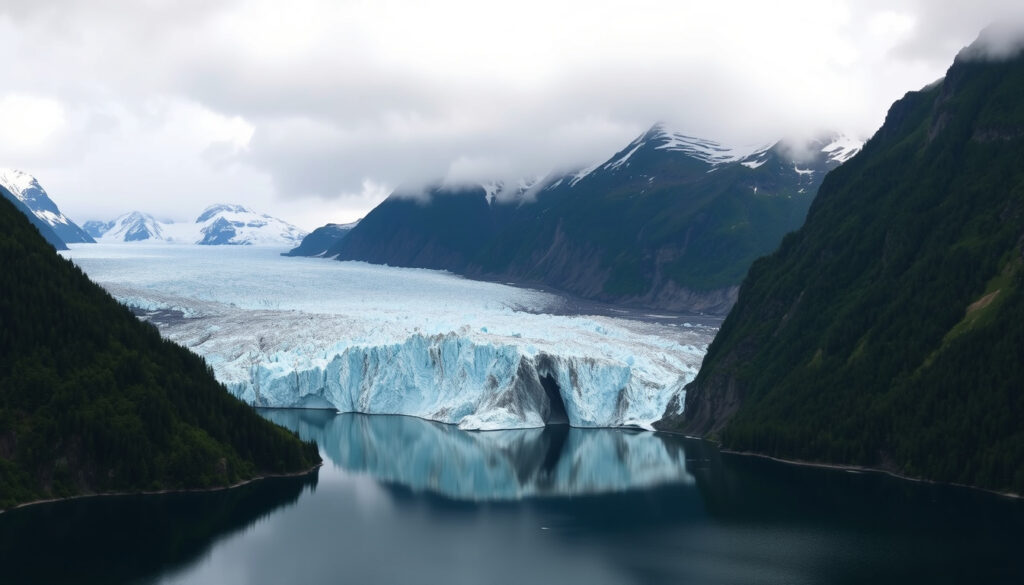
The park’s defining feature is the Harding Icefield, a 700‑square‑mile expanse of ice that feeds nearly 40 glaciers (Travel Outlandish). Many of these are tidewater glaciers—walls of ice that calve directly into the ocean, creating a dynamic landscape you can only reach by boat. The park also protects coastal fjords rich with marine life: sea otters, humpback whales, black bears, puffins, and Steller sea lions are common sightings (NPS wildlife page).
Harding Icefield and its outflowing glaciers
- The icefield covers more than half the park and is the source of over 38 glaciers (Travel Outlandish).
- Glaciers like Exit Glacier, Aialik, and Northwestern are among the most visited.
- Scientists monitor glacial recession; the park is a living laboratory for climate change.
Coastal fjords and marine wildlife
Protected bays and channels offer quiet kayaking waters and prime wildlife viewing. Many visitors see whales within the first hour of a boat tour (Travel Alaska).
Access by boat and kayak
Boat tours from Seward are the only way to see the park’s interior fjords. Kayaking requires a permit and is best done with a guide (NPS kayaking page).
First‑time visitors get the most value from a boat tour, but seasoned paddlers gain deeper access to quiet inlets that tour boats skip.
What is the closest town to Kenai Fjords National Park?
Seward sits right at the park’s eastern boundary and is the primary gateway town. The Kenai Fjords National Park Visitor Center is located in Seward’s Small Boat Harbor area (AlaskaTravel.com). A smaller visitor center also operates at Exit Glacier, about 12 miles from Seward.
Seward as the gateway community
- Seward has hotels, restaurants, gear rentals, and tour operators all within walking distance of the harbor.
- The city population is about 2,600; summer tourists swell it significantly.
Driving directions from Anchorage
The drive from Anchorage to Seward is 126 miles along the Seward Highway, a National Scenic Byway, taking roughly 2.5 hours (U.S. National Park Service directions page). The road is open year‑round, though winter driving conditions can be challenging.
Public transportation and cruise stops
Regular bus services like Park Connection and Alaska/Yukon Trail run between Anchorage and Seward from May to September. Many Alaska cruise itineraries also include a port stop in Seward, giving passengers a day to explore the park.
How many days do you need to see Kenai Fjords National Park?
Most travelers need at least one full day to experience the park’s signature glacier-and‑wildlife tour. However, two or three days allow you to add hiking and kayaking.
One‑day highlights itinerary
- Morning: 6‑hour boat tour of Resurrection Bay and Aialik Glacier (Travel Alaska suggests this as the top activity).
- Afternoon: walk the easy 0.8‑mile Exit Glacier path.
- Evening: explore Seward’s eateries and harbor.
Two‑to‑three‑day itinerary with hiking and kayaking
- Day 1: Boat tour.
- Day 2: Hike the Harding Icefield Trail (8‑mile round trip, 2,800 ft elevation gain).
- Day 3: Guided kayak trip in a protected bay (half day).
Extended stays for serious backcountry travelers
Camping is available at Exit Glacier Campground (reservable) and at backcountry sites accessed by kayak or boat. Multi‑day kayak expeditions require experience and a permit (NPS kayaking page).
Are there grizzly bears in Kenai Fjords National Park?
No grizzly bears inhabit the park; the only bear species found here is the black bear (NPS safety page). Black bears are still powerful and should never be approached. Grizzly bears are present on the Kenai Peninsula further north but not within park boundaries.
Bear species present: black bears only
Black bears are smaller and less aggressive than grizzlies, but they defend food and cubs vigorously. Encounters are rare but possible on trails and near salmon streams.
Bear‑safety practices in Kenai Fjords
- Store all food in bear‑proof containers or lockers (provided at campgrounds).
- Make noise while hiking to avoid surprising a bear.
- Carry bear spray and know how to deploy it—do not rely on firearms (NPS safety guidelines).
What to do if you encounter a bear
- Stay calm, do not run.
- Identify yourself as human by speaking calmly.
- Back away slowly; give the bear an escape route.
- If attacked, fight back with bear spray or any available object.
Many visitors underestimate black bears because they’re not grizzlies. The risk is lower, but the consequence of a food-conditioned bear can still be serious. Food storage rules in the park are mandatory, not optional.
What is the best way to explore Kenai Fjords National Park?
The best method depends on your time and comfort: boat tours provide the widest access, kayaking gives solitude, hiking gets you close to the ice, and the visitor center offers a free introduction.
Boat tours from Seward
Boat tours are the primary way to see tidewater glaciers and marine wildlife. The 6‑hour Northwestern Fjord tour is the longest; shorter options include Resurrection Bay and Aialik Glacier trips. Book online in summer (Travel Alaska recommends advance reservations).
Kayaking the fjords
Kayaking requires a permit from the NPS and is best done with a guide unless you have significant cold‑water paddling experience. Day trips from Miller’s Landing and other outfitters are common.
Hiking the Harding Icefield Trail
This trail is the park’s only maintained full‑day hike. It starts at Exit Glacier and climbs to the icefield’s edge. The elevation gain of 2,800 ft over 4 miles makes it strenuous; alow yourself 6–8 hours round trip. Trekking poles recommended.
Visitor center exhibits and educational programs
The Seward Visitor Center has interactive exhibits on glaciers, wildlife, and native history. Ranger‑led programs run daily in summer. The Exit Glacier Nature Center is smaller but offers close‑up views of the glacier toe (AlaskaTravel.com).
The park’s access is unusually fragmented: only the Exit Glacier area is reachable by road. Everything else requires a boat or plane. For the first‑time visitor, a single boat tour from Seward is the most time‑efficient investment. Experienced adventurers will prefer kayaking or multi‑day backcountry trips, but those demand permits, gear, and proper planning.
Planning Your Visit Step by Step
Use these steps to structure your trip without missing critical logistics.
- Choose your season. June – August is the only reliable window for boat tours and trail access. September is possible but services taper off.
- Secure accommodations in Seward. Hotels fill early; book 2–3 months ahead for peak season.
- Reserve a boat tour. The 6‑hour Northwestern Fjord tour is the best value for first‑timers. Shorter tours exist if time is tight.
- Plan one land activity. Hike the Harding Icefield Trail or walk the Exit Glacier path. Both give a different perspective from the water.
- Check bear safety and pack accordingly. Bear spray, bear‑proof food storage, and a first‑aid kit are essentials.
- Prepare for variable weather. Rain gear, layers, sun protection, and sturdy footwear are non‑negotiable.
Confirmed facts
- No grizzly bears; only black bears inhabit the park (NPS safety page).
- All boat tours depart from Seward during summer months (Travel Alaska).
- No entrance fee (NPS fees page).
What’s unclear
- Exact size of Harding Icefield (estimates vary around 700 square miles; NPS does not provide exact figure).
- Exact number of named glaciers fluctuates with glacial retreat; NPS states “nearly 40”.
- Visitor numbers are estimates; precise annual figures vary by source.
- Future changes in boat tour routes due to glacial recession are not publicly detailed.
“Nearly 40 glaciers flow from the Harding Icefield, Kenai Fjords’ crowning feature.”
— National Park Service, official park homepage
“Kenai Fjords National Park comprises the Harding Icefield, its outflowing glaciers, and coastal fjords and islands.”
— Wikipedia
For the traveler, the implication is clear: the park’s appeal hinges on the icefield and its marine outlet glaciers. If glacial recession reshapes routes, future visitors may need to adapt their expectations. For now, the current slate of tours and trails offers a once‑in‑a‑lifetime experience.
Related reading: Sixt Rent a Car Review · Fish Tacos Near Me
sunshinewhispers.com, thepostcardtraveler.com, alpinewanderlust.com
Frequently asked questions
Do I need a reservation for a boat tour?
Yes, especially in July and August. Operators recommend booking at least a week in advance (Travel Alaska).
Are pets allowed in Kenai Fjords National Park?
Pets are allowed on developed trails near Exit Glacier but must be leashed. They are not permitted on boat tours or in backcountry areas (NPS pets policy).
Is there cell service inside the park?
Cell coverage is very limited. Seward has service, but most of the park—especially the fjords and icefield—has no signal.
Can I hike the Harding Icefield Trail in winter?
The trail is not maintained in winter and is dangerous. Snow conditions, avalanche risk, and short daylight hours make it suitable only for experienced winter mountaineers.
Are there any sandy beaches in the park?
No. The coastline is rocky, rugged, and often lined with glacial silt. Sandy beaches are not a feature of Kenai Fjords.
What should I pack for a day trip to Kenai Fjords?
Rain jacket, warm layers, sturdy shoes, binoculars, camera, water, snacks, sunscreen, insect repellent, and bear spray. If taking a boat tour, motion sickness medication is wise.
For the first‑time visitor to Alaska, the choice is clear: base yourself in Seward for two days, book a boat tour on day one, and hike the Harding Icefield Trail on day two. That combination delivers the park’s essence—tidewater glaciers, marine wildlife, and the massive icefield—without overextending. Or skip the hiking and spend the second day kayaking. Either way, the park rewards those who respect its seasonal window and pack for its weather.
More related posts
 Dodgers vs Red Sox: Rivalry, History, and 2026 Games
 Bank of America Credit Card Login: Step-by-Step Official Guide
 S&P 500 Futures – Live Prices and Trading Guide
 B&H Photo Video: Trust, Controversy, Pricing & More
 Swimming Classes for 4 Year Olds: Age & Timelines
 Mexico National Football Team vs Switzerland Lineups 2025
 Cast of House of Guinness: Netflix Guide & Real History
 How Many People Died on the Titanic? Death Toll & Facts